massiv unsichtbar
Volkskundemuseum Wien remembrance project for the Schönbornpark air-raid shelter in Vienna’s 8th district of Josefstadt
MASSIV unsichtbar
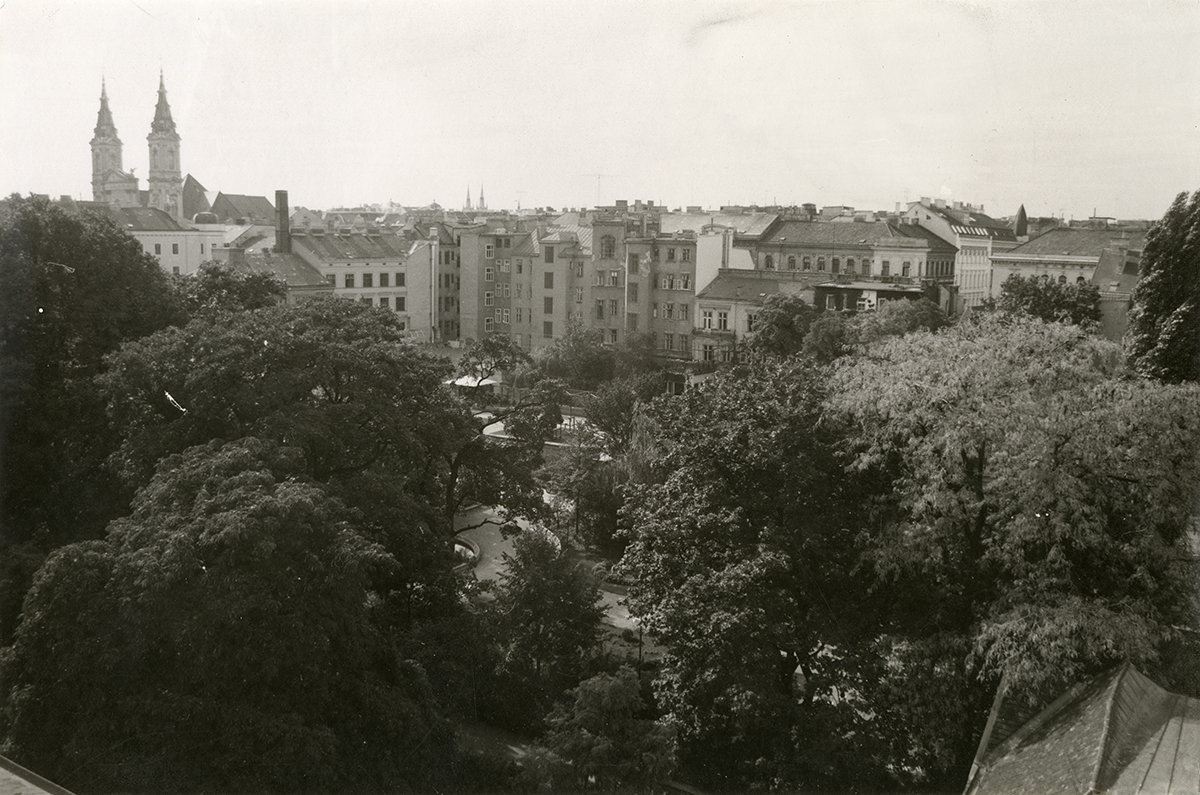
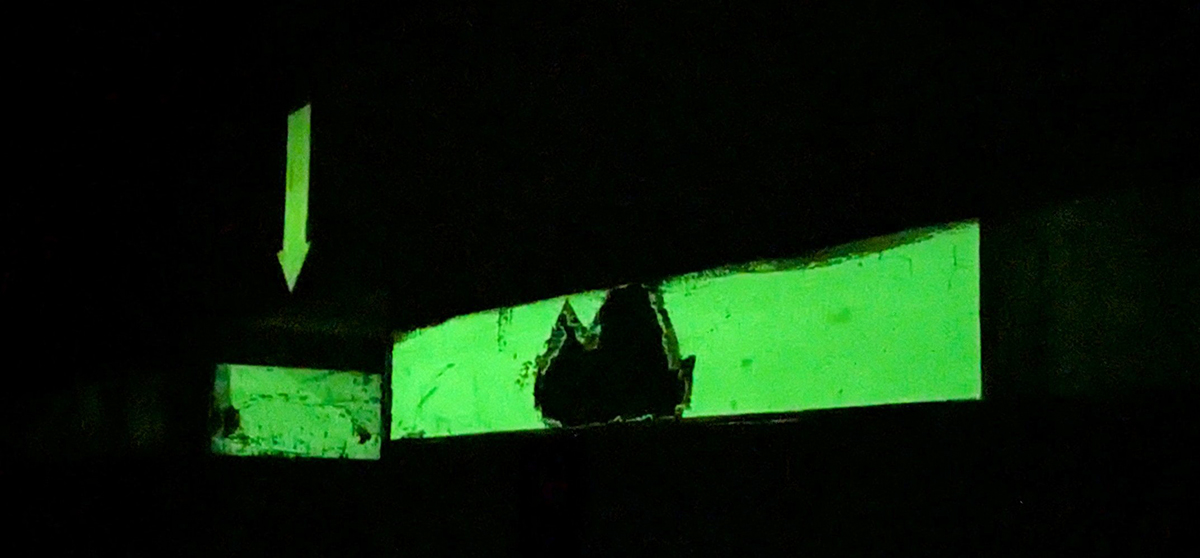
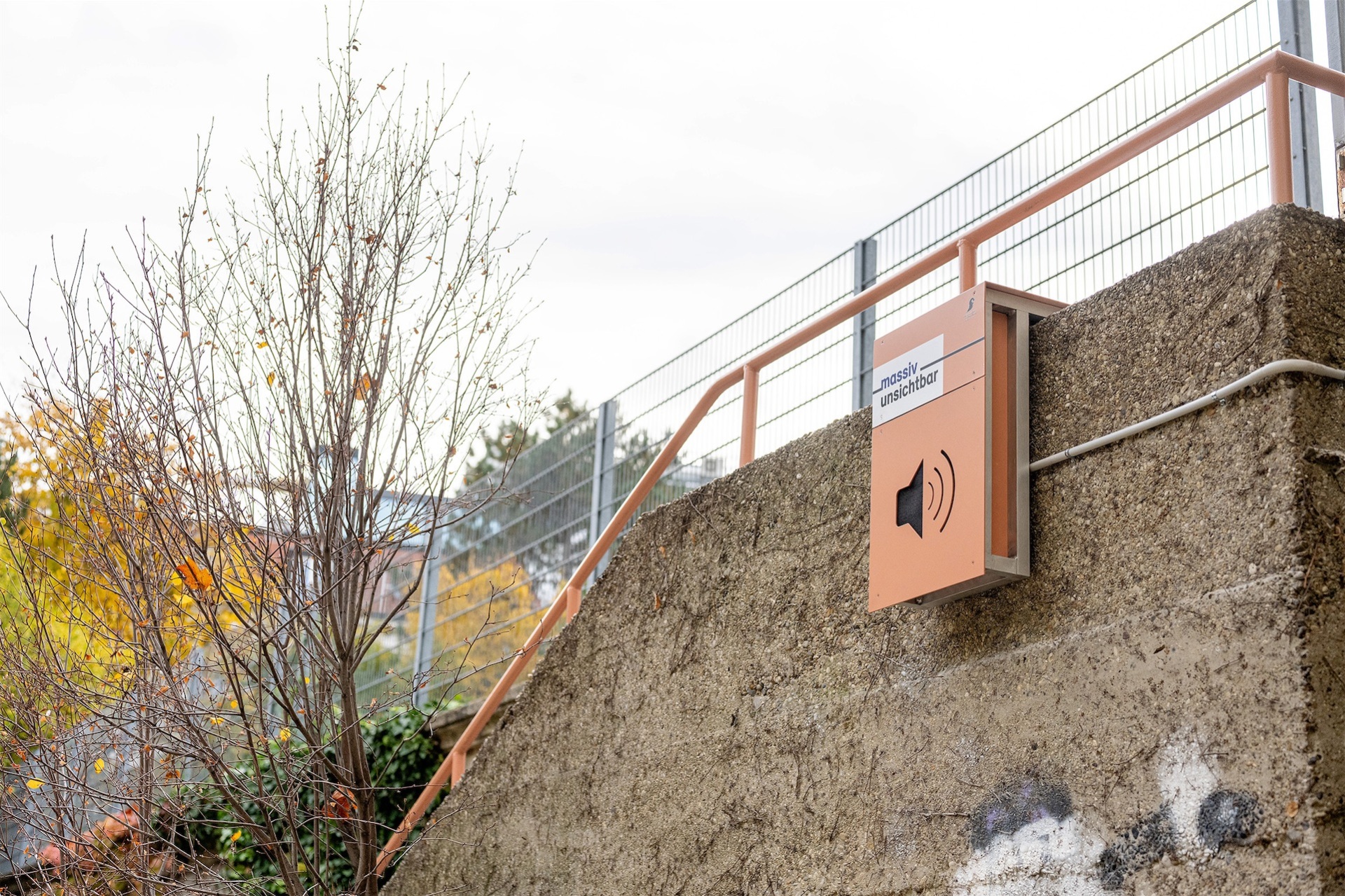
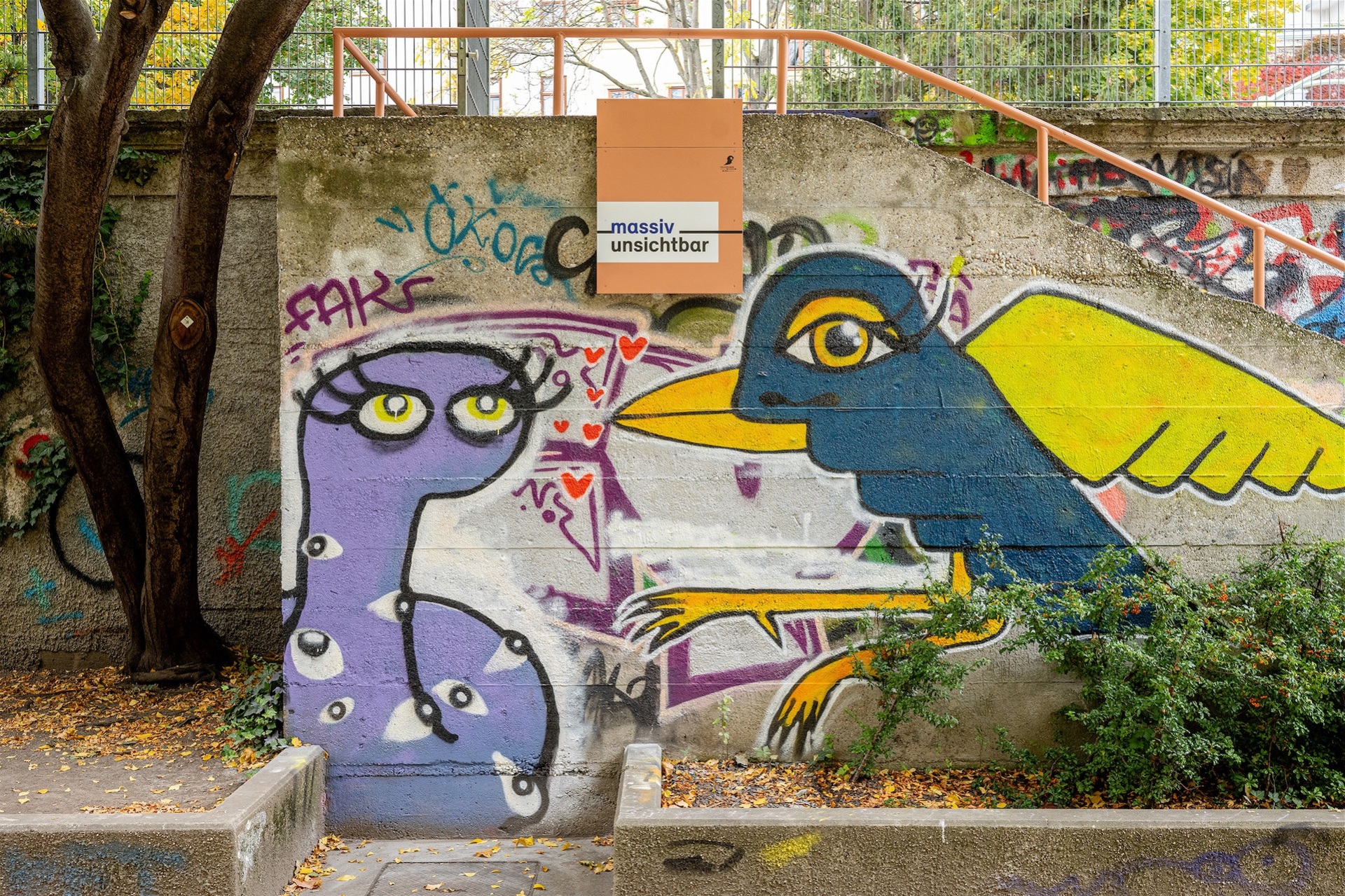
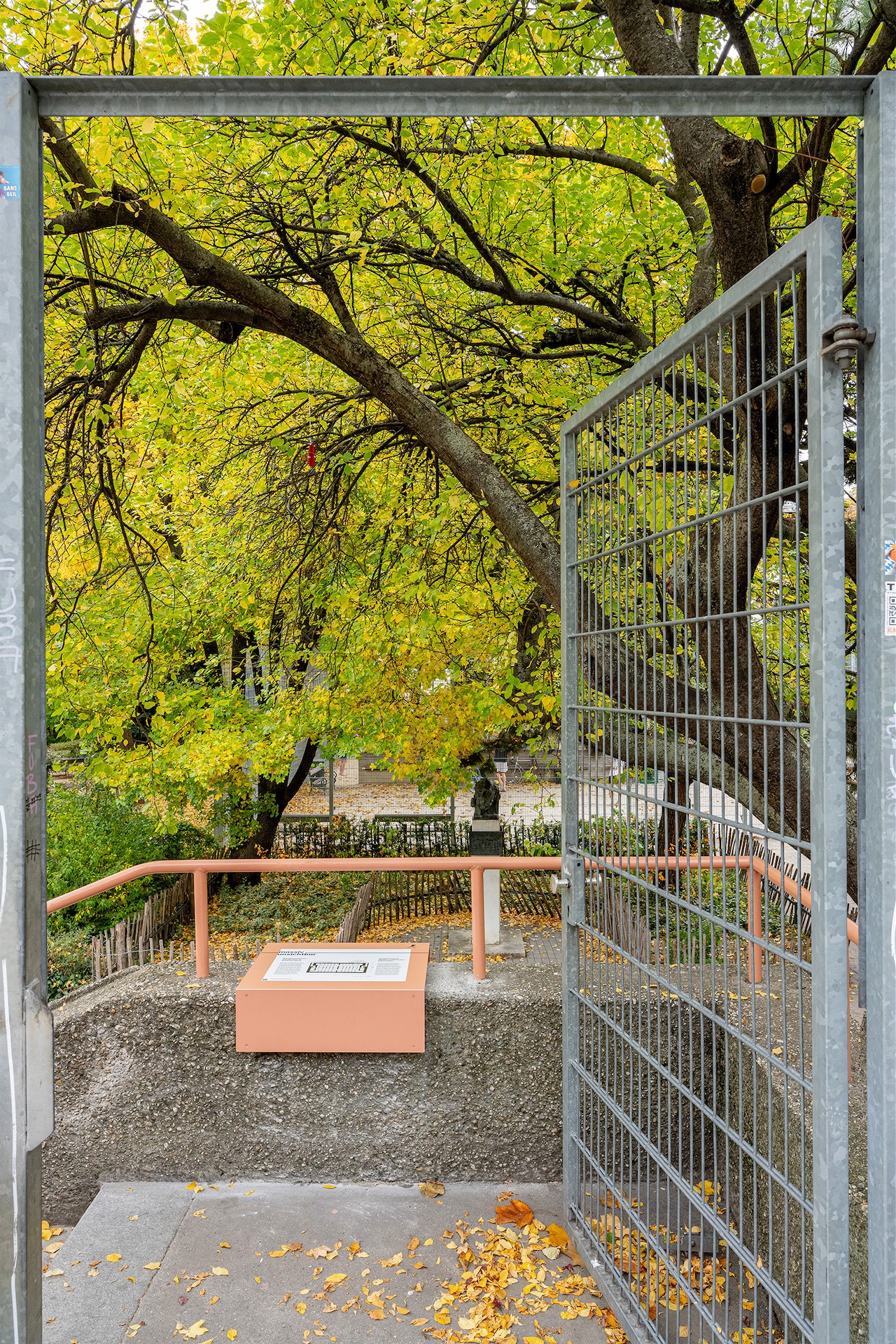
Responses and questions like this are at the heart of massiv unsichtbar – a project about the Schönbornpark air-raid shelter in Vienna launched in mid-2023. Following a request from Kulturkommission Josefstadt1, we2 spend over two years analysing and examining this unique building close to Schönborn Garden Palace – the home of Volkskundemuseum Wien since 1917. We quickly decided against the initial idea of a memorial plaque and, instead, opted for a new concept – a more comprehensive remembrance and awareness project that focuses on two features of the shelter that we consider to be of central importance: For one, the building is impressively massive. Made of reinforced concrete, it is virtually indestructible. But despite that, it is almost imperceptible – it is more or less invisible (unsichtbar; Ill. 1).
Hauntology3 – about after-effects
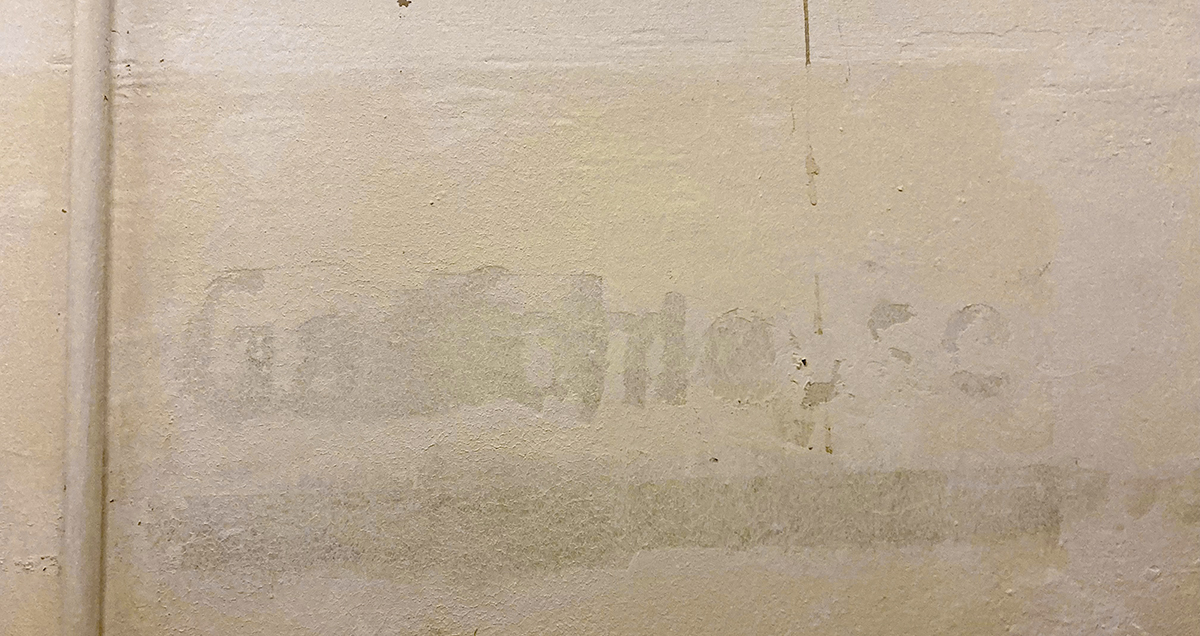
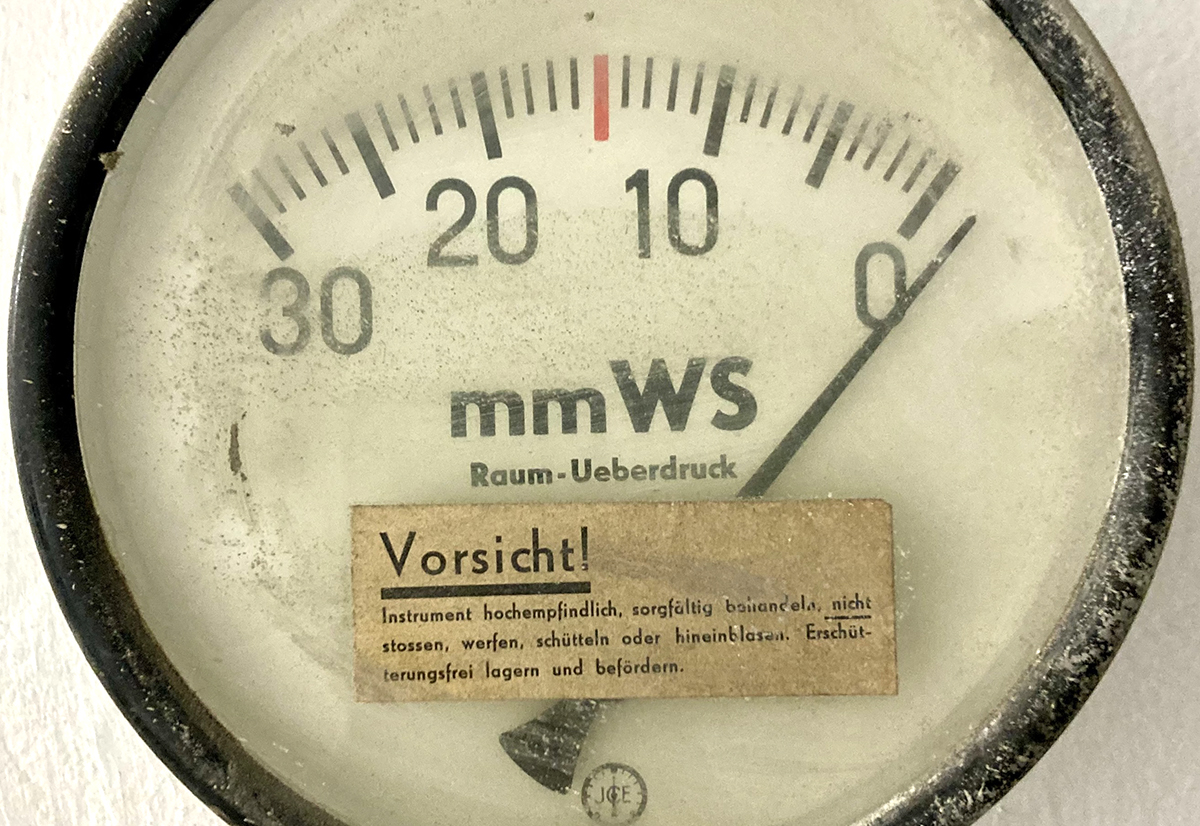
Once recognised as a building, the air-raid shelter in Schönbornpark leaves a lasting, somewhat peculiar impression; it has an almost ghostly appearance. While it is not really tangible from the outside, it is very much there. Its massive presence is concealed by greenery and graffiti. Inside the shelter, past absences interact with contemporary presences. The tightness and the atmosphere of the rooms inside – with relics like ‘gas-tight’ steel gates, small bunks and strong sensory impressions (the smell, the cold; Ill. 2 and 3) – make us particularly aware of the physical and psychological threats resulting from the war.
Throughout almost all of its existence, the structure – often referred to as bunker – has been filled with history and experience, with comprehensible things and incomprehensible after-effects.
For 80 years, the structure was a place of protection and storage. From 1943 to 1945, it served its original purpose to protect against threats posed by aerial warfare and the Nazi regime (Ill. 4). Then, the shelter was used as a storage facility for city administration departments. Since the 1980s, it has been a depot for Volkskundemuseum Wien, used for knowledge and object storing.
By allowing the building to ‘haunt’ us, we intend to lift the strict divide between what’s present and what’s absent (people, things, histories, experiences, ideas), connecting the past with the present and the future. To achieve a comprehensive and layered experience, the project incorporates physical, sensory and emotional, as well as ethical aspects while we are being ‘haunted’ and while facing the ‘haunting’.4
Especially in times when wars are coming closer to us than they have in a long time, we are once again aware of threats coming from the air, like those posed by drones. At the same time, democracy, freedom of opinion and openness have increasingly come under pressure in Austria and its neighbouring countries. It is in this time that we want to take a stand, share information and counter illiberal resurgences by offering reflections on history.
The project
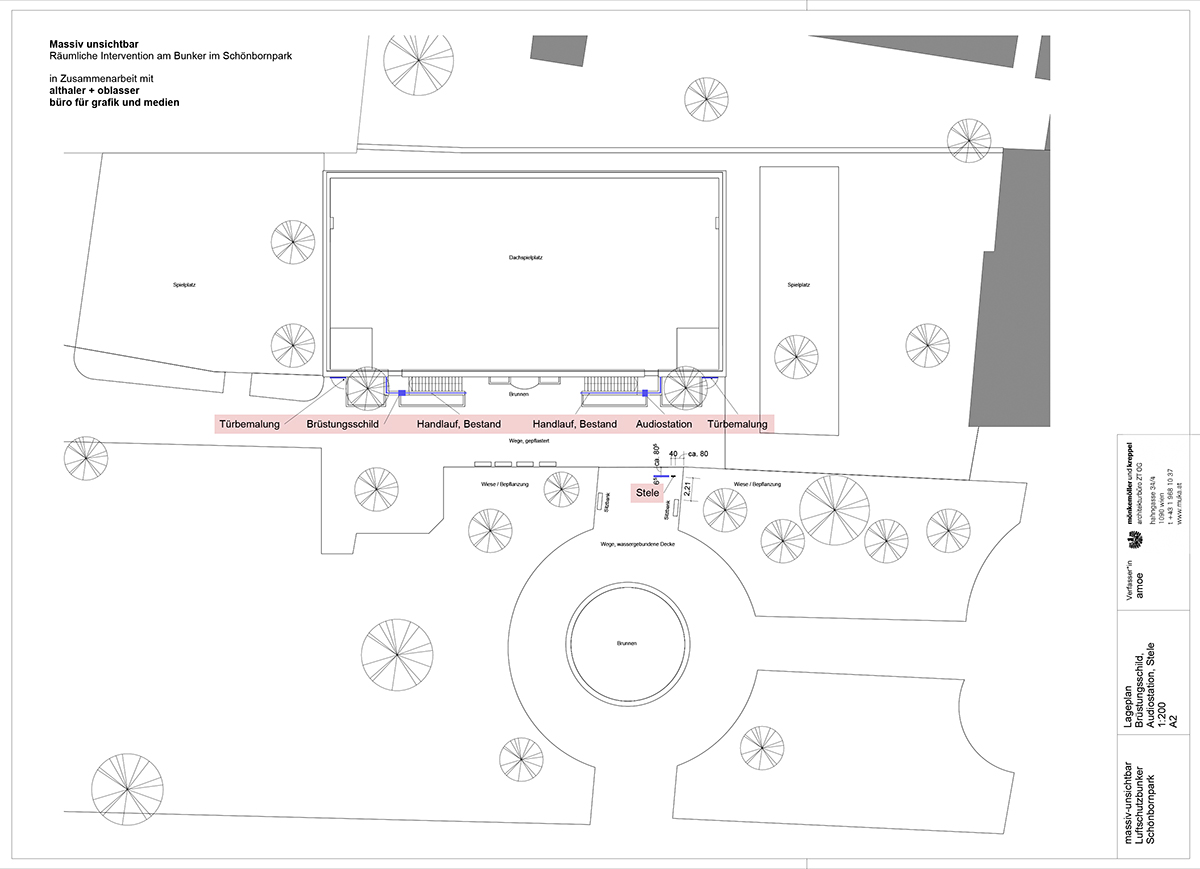
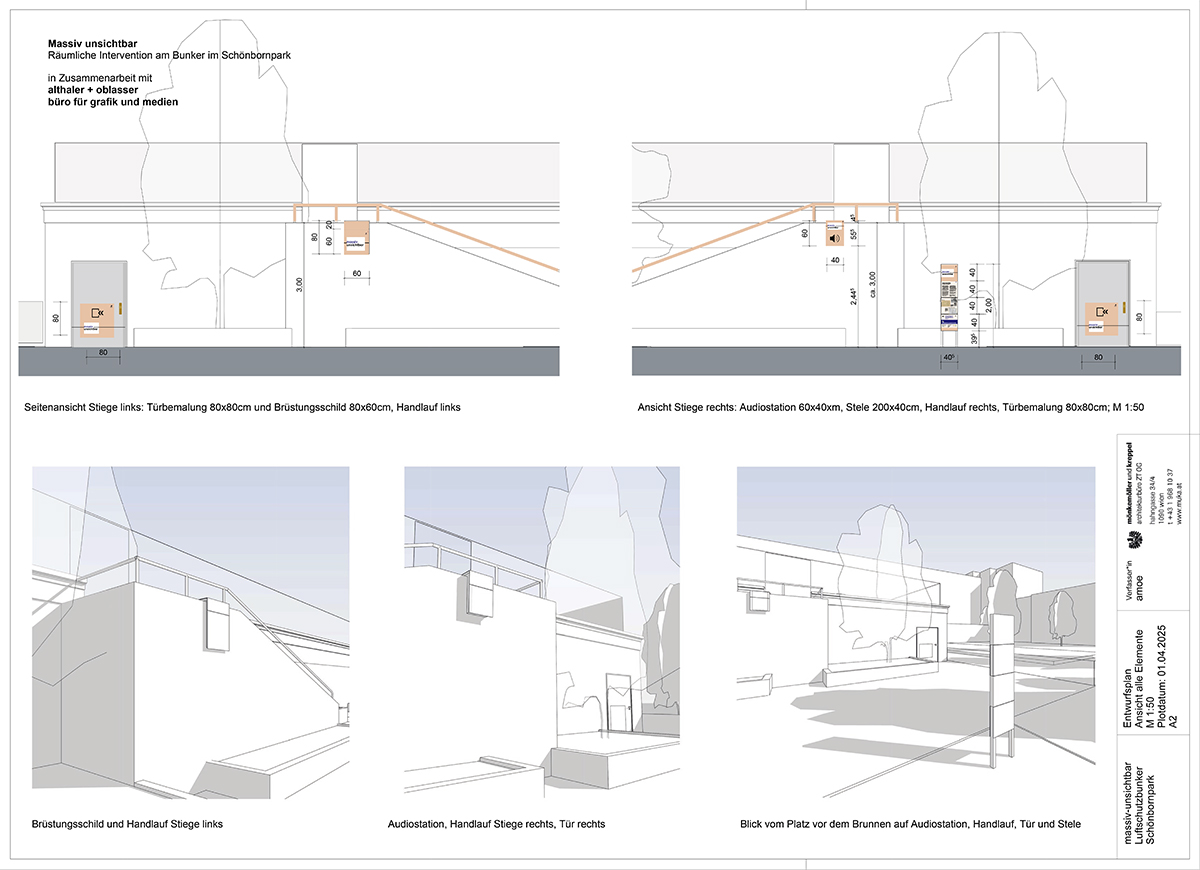
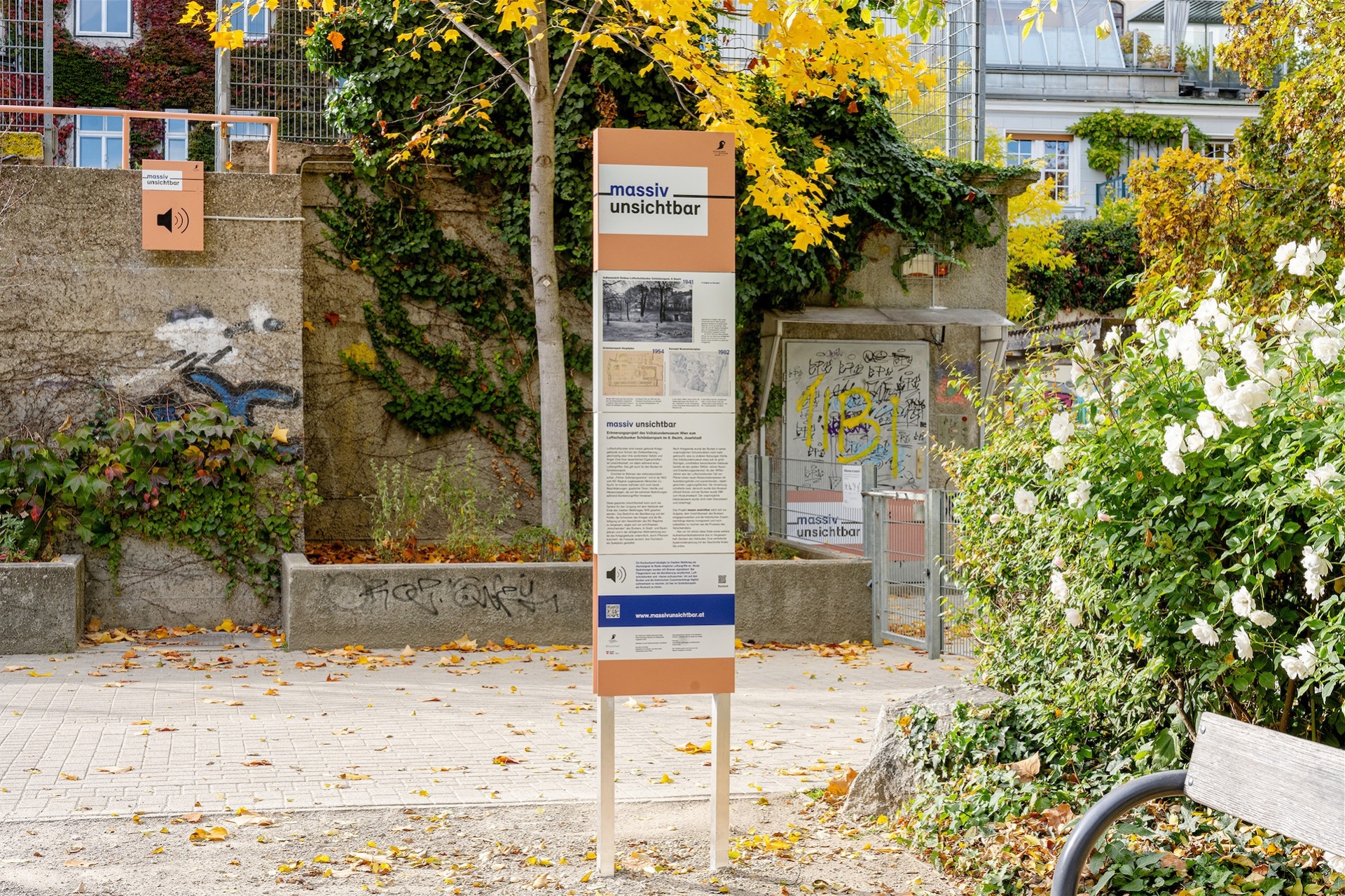
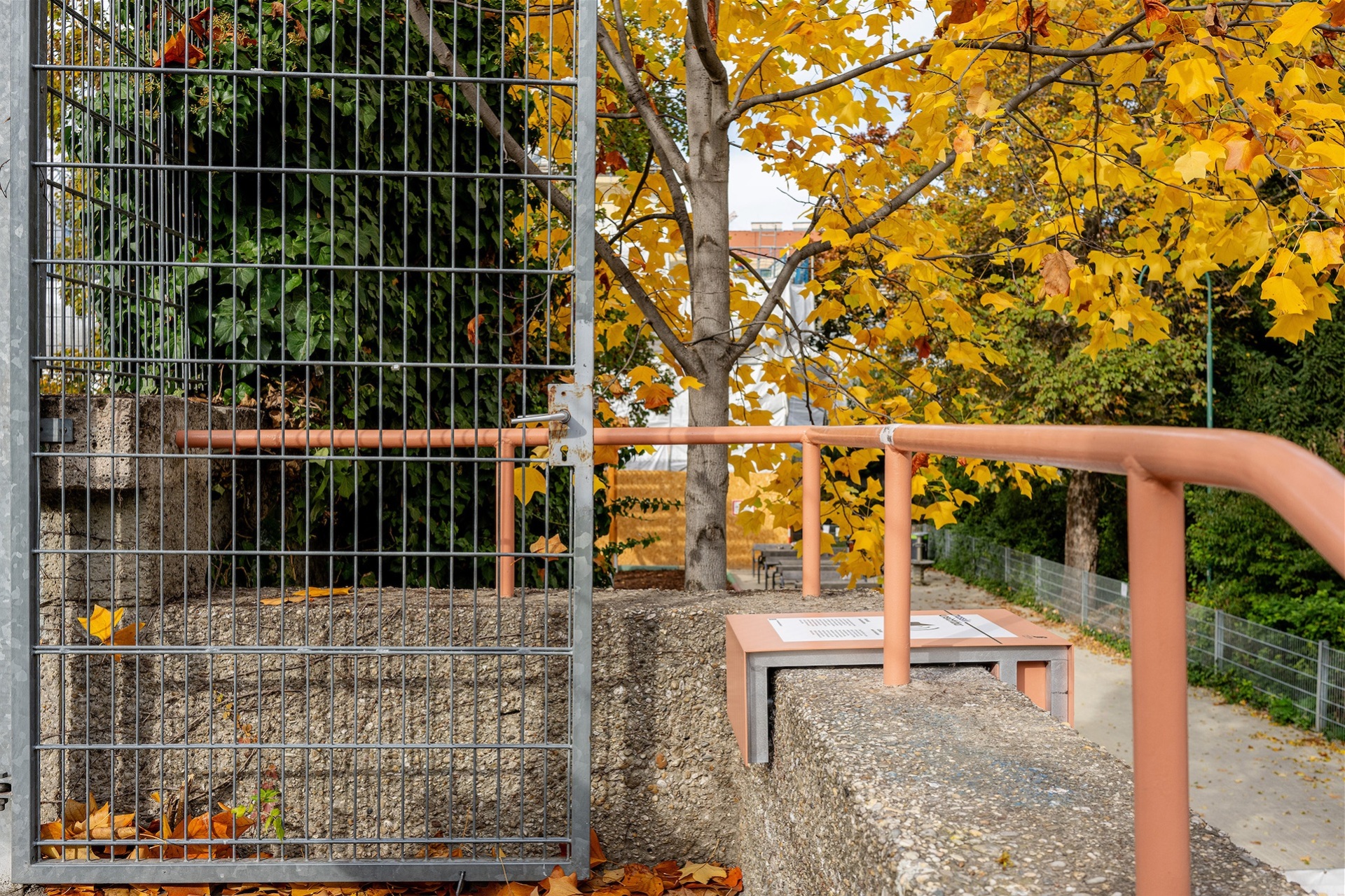
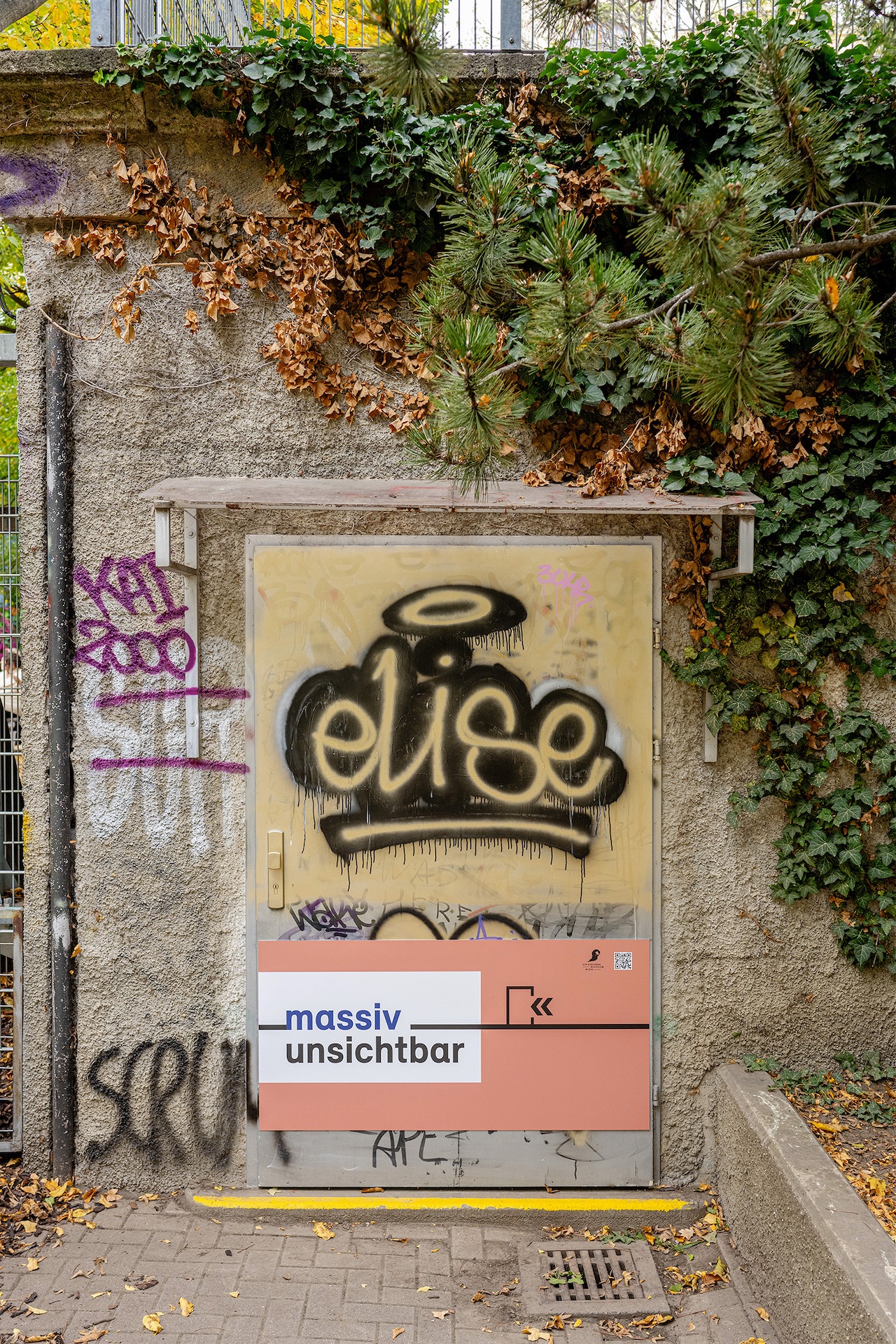
massiv unsichtbar attempts to make the building, in its physical and historical dimensions, as well as its past uses and future possibilities, visible (again). To accomplish this, the project consists, on the one hand, of a permanent visual and sound-based intervention (Ill. 5–12) in front of and on the shelter, and, on the other, of a project website where we tell the story of the building and its surrounding area in four chapters.
We have outlined the building’s history and biography primarily from the perspective of the museum. We base our elaborations on source material from the museum’s archive and photo collection. For certain aspects that are of particular importance to us, we have used materials from other institutions, consulted with experts5 and included the perspectives of witnesses6 of the time.
From air-raid protection to venue
The four chapters of our project cover the entire biography of the structure – from its actual erection during World War Two to obtaining full construction permit and regulatory approval in 2025, which marks the beginning of the transformation of the building for the future.
Chapter 1: The Second World War and Air-Raid Protection
War and Air-Raid Protection in Vienna
Air-Raid Protection at Volkskundemuseum Wien
Chapter 2: Remembering and Forgetting
POV: Air-Raid Shelter and Museum after 1945
Becoming INvisible
Chapter 3: Who Does the Shelter Belong to?
Into the Bunker
Plans and Models
The ‘Josefstadt Bunker War’
Chapter 4: Out of the Bunker
Evaluation A Video Loop Tour through the Shelter with Music
Massively Useable
Select a chapter
- A subsidiary entity of the council of Vienna’s 8th district; the project was made possible by funding from Kulturkommission Josefstadt.
- Maria Raid and Magdalena Puchberger (researchers at Volkskundemuseum Wien, project lead).
- Based on Jacques Derrida’s book Spectres of Marx (1993), which deals (among other things) with the unquestioned presence – often unchallenged in terms of state policy and the politics of memory – of ideas, theories and models from the past. Jacques Derrida: Marx’ Gespenster. Der Staat der Schuld, die Trauerarbeit und die neue Internationale. Frankfurt am Main 2022.
- Cf., for example, Jessica Auchter: The Politics of Haunting and Memory in International Relations. London 2014.
- We would like to sincerely thank Nicole-Melanie Goll, Georg Hoffmann and Lukas Schretter for sharing their knowledge and taking part as speakers in our video interviews. Nicole-Melanie Goll also wrote the text for the chapter War and Air-Raid Protection in Vienna.
- We would like to thank Österreichische Mediathek, and in particular the staff of the project Sammlung MenschenLeben, for providing and preparing the selected content.