The ‘Josefstadt Bunker War’
1983 – upheaval
In 1983, the political post-war system began to gradually dissolve, as could be seen in the national elections, which were held at the same time as regional and municipal council elections in Vienna on 24 April 1983. At the federal level, the Social Democratic Party (SPÖ) had lost its absolute majority, and Bruno Kreisky (1911–1990) resigned as Federal Chancellor; he was succeeded by his fellow party member Fred Sinowatz (1929–2008). With the economic liberal Norbert Steger (*1944) at the helm, the Freedom Party (FPÖ) achieved its worst election result until then. The election campaigns at both the federal and local levels were characterised by scandals surrounding the construction of the Vienna General Hospital (AKH) and the Austria Center Vienna (ACV). The old system of the two ‘parties for the people’, SPÖ and ÖVP, was crumbling; new protest movements and forms of citizen participation began to emerge. Following protests against the Zwentendorf nuclear power plant, two environmentally conscious parties formed – the left-leaning Alternative List Austria (ALÖ) and the centrist-conservative United Greens of Austria (VGÖ). They competed against each other in the election campaign. To this day, the popular petition against the ACV convention centre, initiated by the People’s Party (ÖVP), remains the most successful petition in Austria’s history.
Globally, 1983 was considered the ‘most dangerous year’ of the Cold War. The deployment of Pershing II missiles in Germany brought the world to the brink of a nuclear war. The arms race between the two superpowers, the US and the USSR, had led to a demonstration in Austria in 1982 under the motto ‘Prevent Nuclear War! Disarm!’. About 70,000 participants attended the rally, the largest in the country until then.

Georg Hoffmann, Director of the Museum of Military History (Heeresgeschichtliches Museum, HGM) in Vienna and Aerial Warfare Historian
Georg Hoffmann, Director of the Museum of Military History (Heeresgeschichtliches Museum, HGM) in Vienna and Aerial Warfare Historian
As often happens, the bigger picture can also be seen on another level: In June 1983, the deputy district council chairman of the 8th district of Josefstadt, Kurt Blümel (1921–2008) of the SPÖ, announced in the district newspaper Westend that the “the elections are over, and everyone is turning back to everyday problems”1. During the election campaign, many meetings had been held in the 8th district to develop a programme “for a more beautiful Josefstadt”. Now that the elections were over, they could be implemented. Even though a member of the ÖVP, Walter Kasparek (1929–2012), remained Josefstadt district council chairman, it was clear that the election had brought other influencing powers and issues into play.
Newly formed interest groups now wanted to actively participate in the design of Schönbornpark and, in keeping with election campaign promises, were to be given a say.
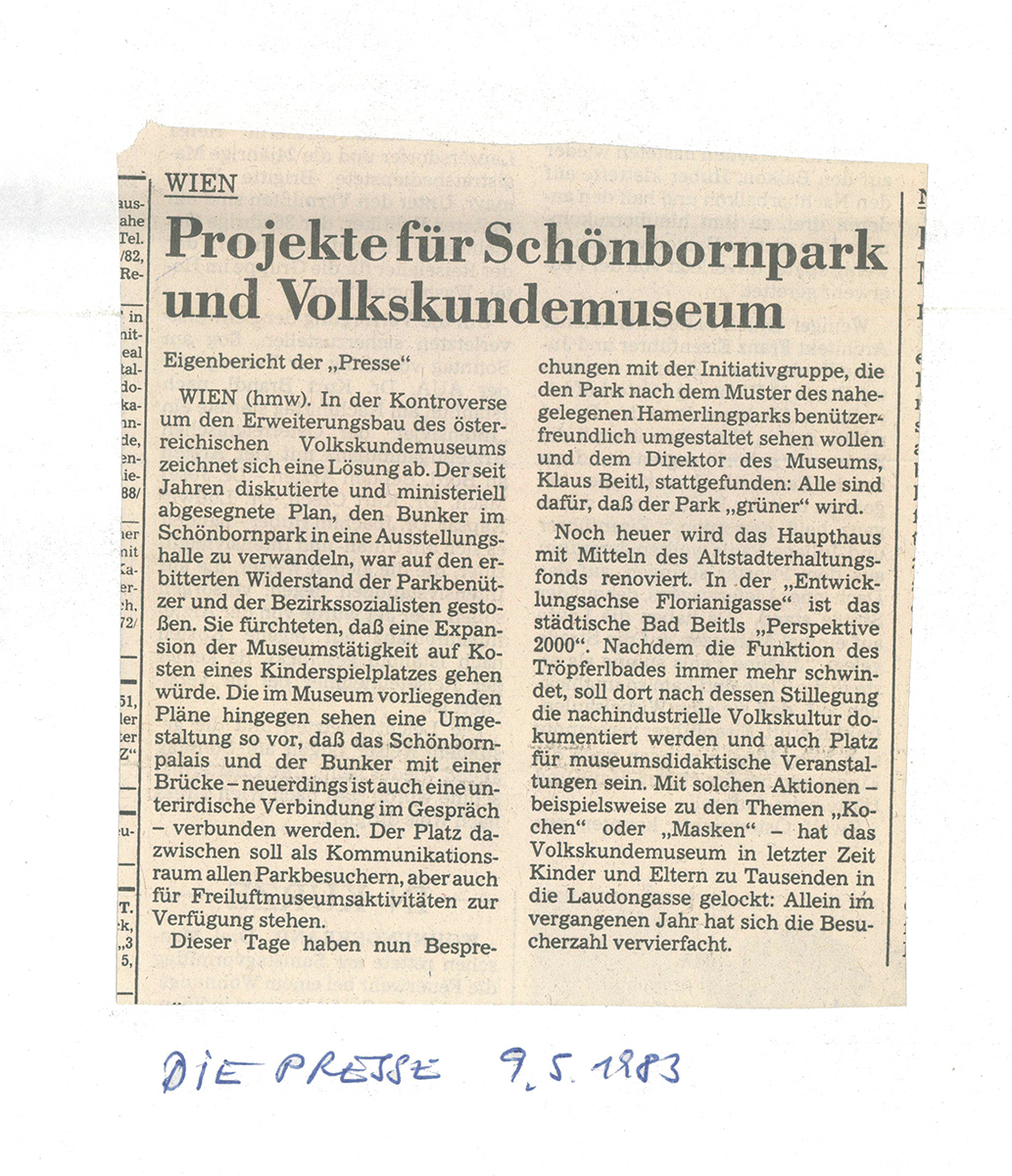
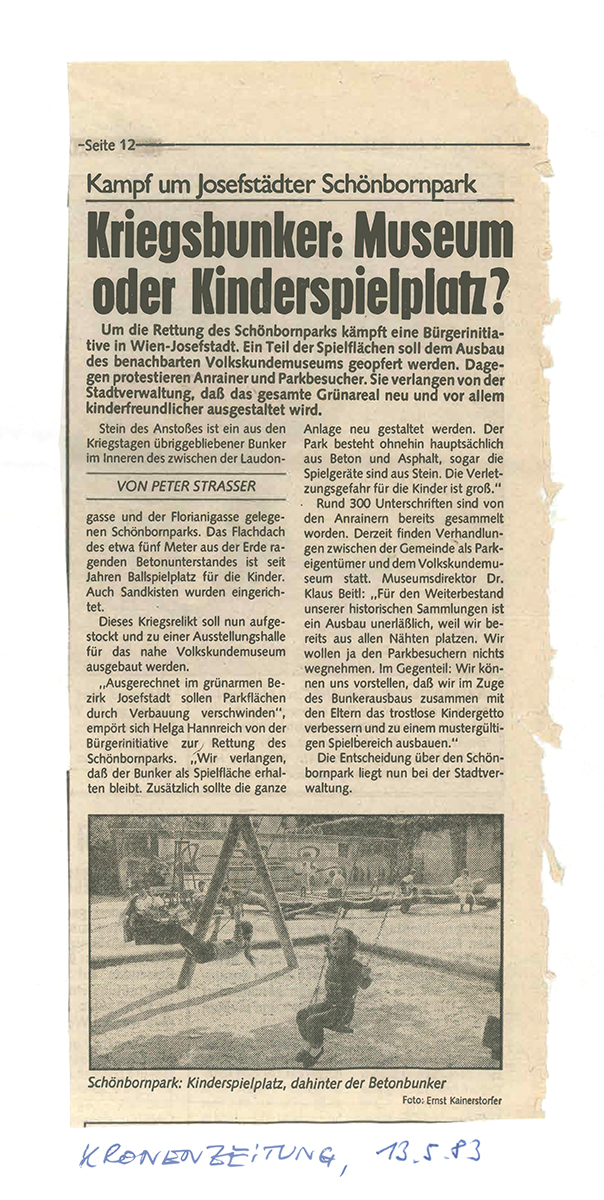
It soon became apparent that this posed a problem for Volkskundemuseum and its comprehensive expansion plans for the site. As of February 1983, the plan was to renovate the façade of Schönborn Garden Palace and to adapt the Schönbornpark air-raid shelter and the Tröpferlbad bath on Florianigasse to become part of the new museum complex (see Chapter 3: Plans and Models). After the elections, however, park design claims and initiatives took a turn, as can be seen from newspaper reports from May 1983. Shortly after Klaus Beitl (1929–2026), Museum Director at the time, had elaborated on the “Perspective 2000” and the museum’s comprehensive plans (Ill. 1) in the newspaper Die Presse, the Kronen Zeitung newspaper proclaimed a surprisingly aggressive “fight for Schönbornpark in Josefstadt” with the air-raid shelter as the “bone of contention”. Representatives of the Citizen Initiative to Save Schönbornpark stated that the “district of Josefstadt that has so little greenery” should not be “sacrificed” for the benefit of the museum’s expansion and the shelter should remain a playground for children (Ill. 2).
Who does the shelter belong to? Who does the park belong to?
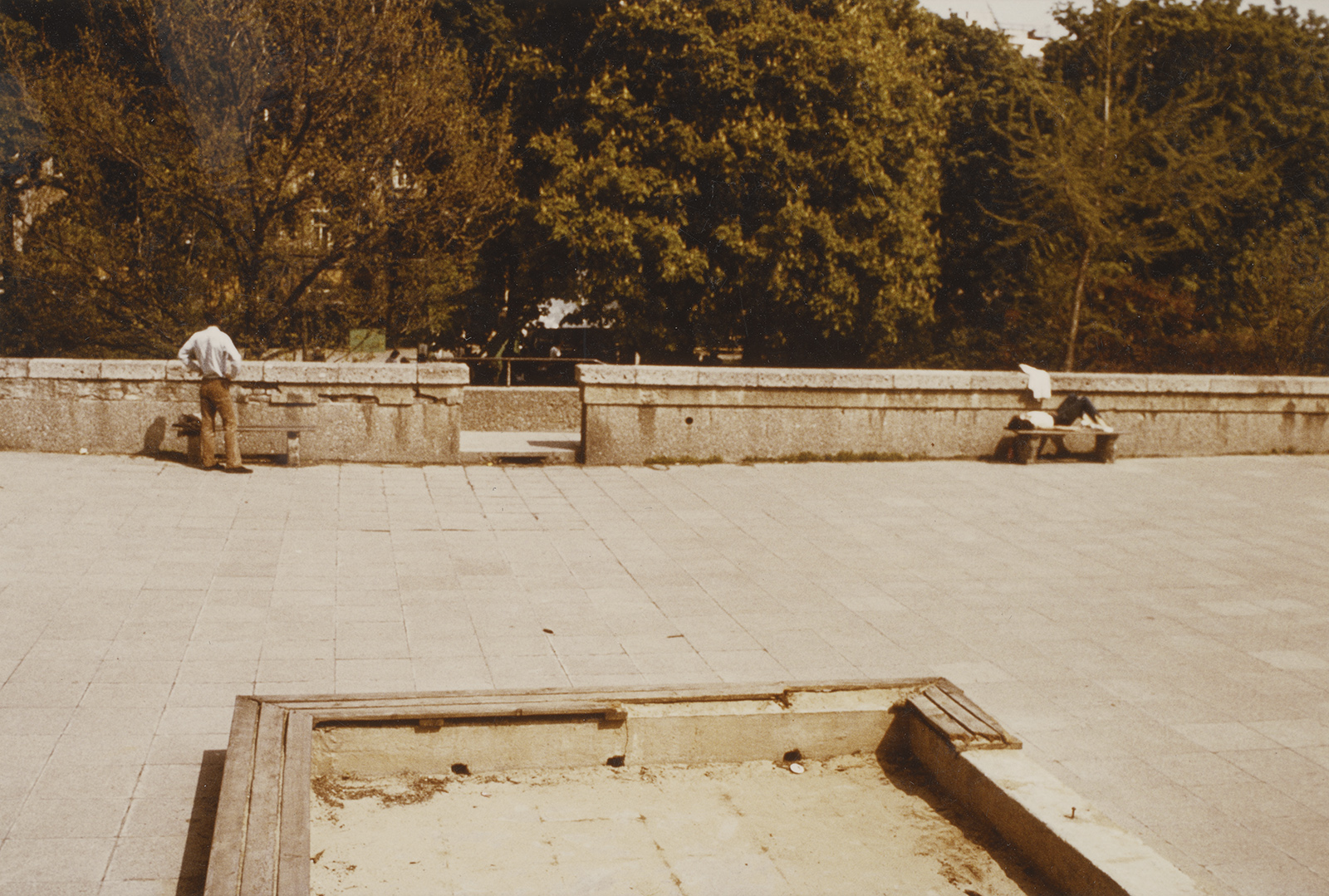
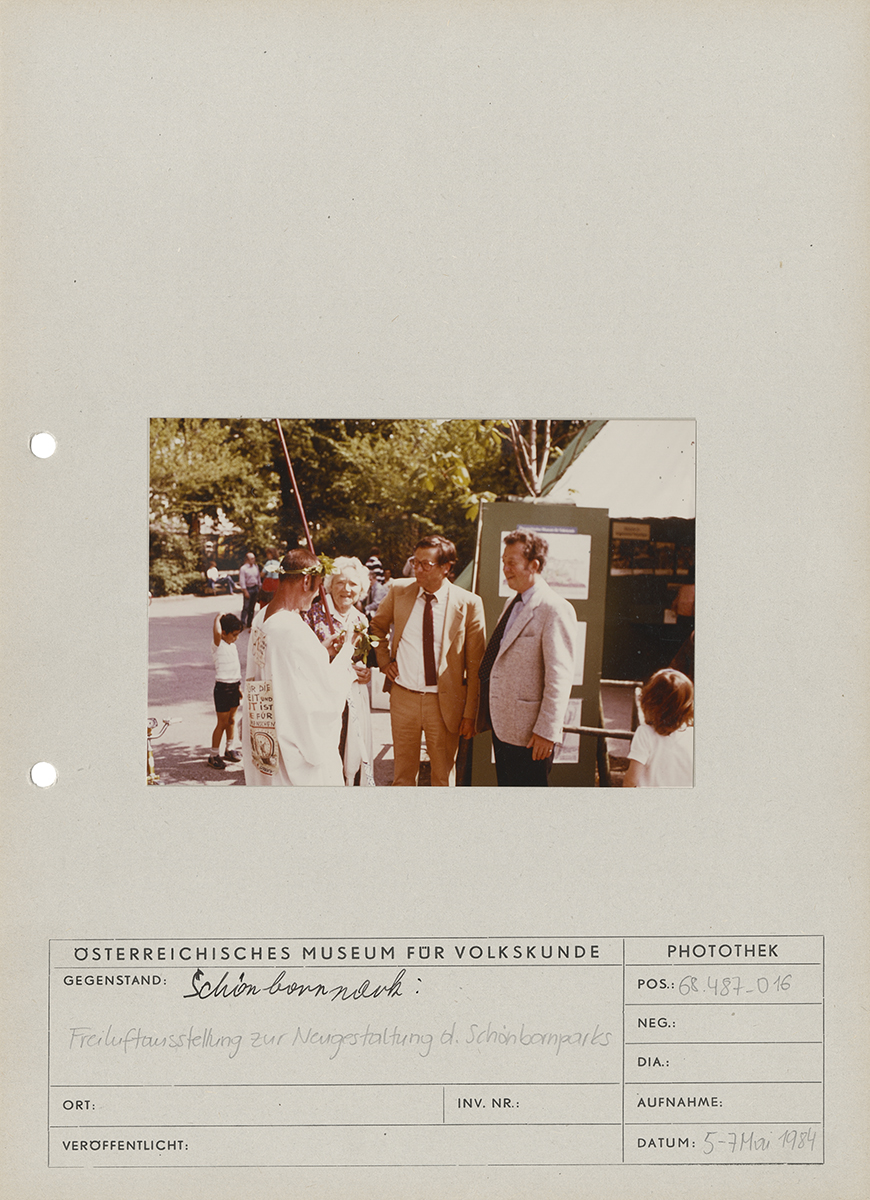
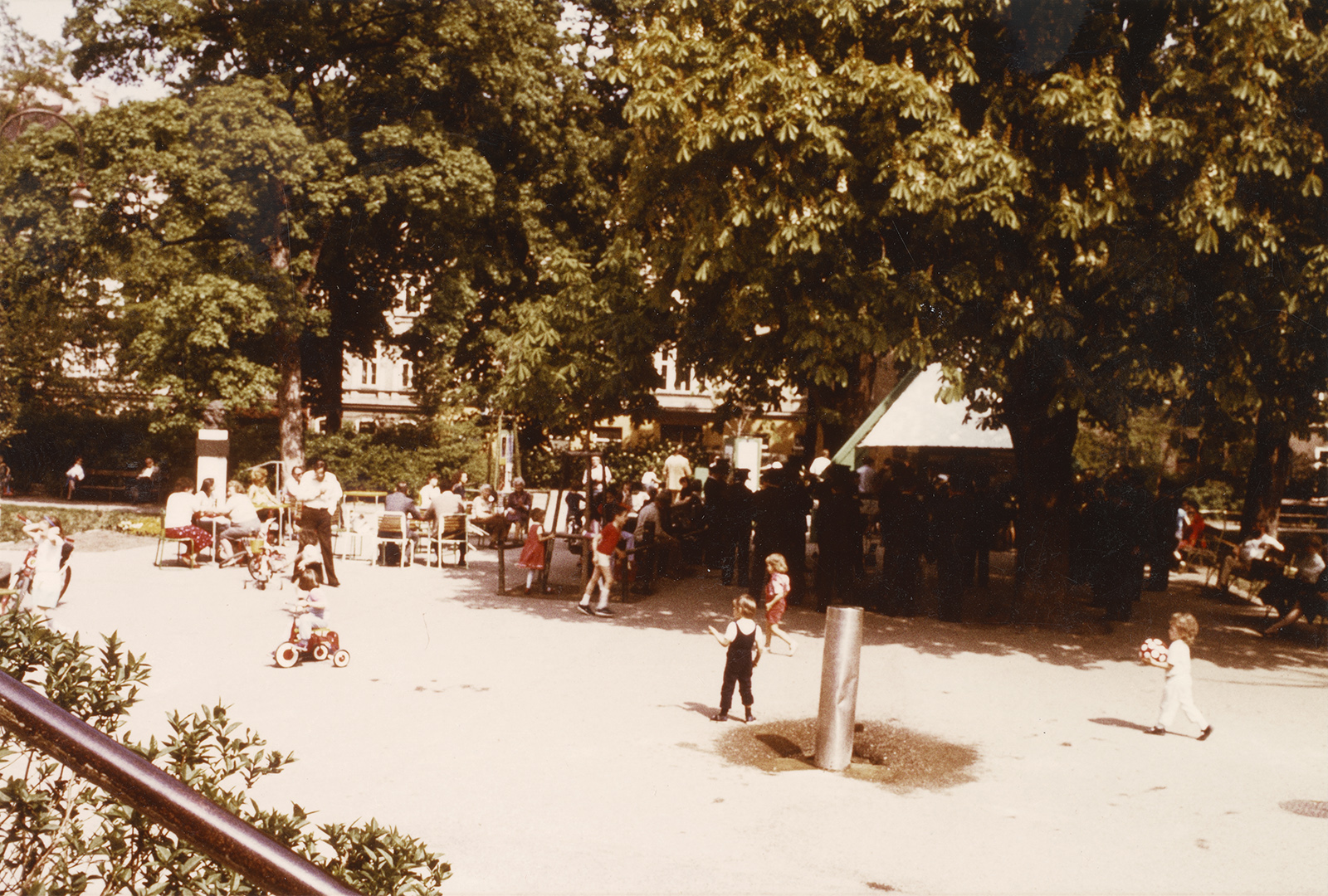
Despite conflicts and differing interests, there was a general agreement that a redesign of the park was necessary after almost 20 years without any relevant changes for users. At the end of September 1983, the district council unanimously decided that measures needed to be taken to “enhance the design” of Schönbornpark (Ill. 3). A public town hall meeting held in September 1983 was the first of several citizen participation formats in which the design was addressed. The meeting, where a number of design proposals were made, had been convened by the Councillor for the Environment responsible for the park, Peter Schieder (1941–2013), and was also attended by Museum Director Klaus Beitl. From 5 to 7 May 1984, a large open-air exhibition was held in Schönbornpark, where the city councillor assured that it would “of course” be possible to “give opinions on and make suggestions for the design of the park”. The park should become “simple, practical, child-friendly and user-friendly”.2 (Ill. 4 and 5) Volkskundemuseum also presented its expansion plans on four display boards at the open-air exhibition. In an interview for the newspaper Westend, Herbert Zima (1933–2018), a member of the regional parliament of Vienna, reported on the results of 120 written statements submitted during the exhibition. He painted a quite colourful picture of the wishes of different age groups: “Children and young people, for example, want, among other things, a slide, improved ball courts and a swimming or paddling pool; 20- to 40-year-olds want the babies’ playground to be improved, and those in favour of the Volkskundemuseum’s proposal for bunker development are mainly representatives of the over-40 age group.”3 Ideas for the redesign of Schönbornpark continued to be submitted even after the exhibition. The air-raid shelter was overwhelmingly seen as the biggest problem in Schönbornpark: “Although it is not one of the giant monsters from the war, it creates a bad overall impression.”4 Since the structure could not be removed, one should “make a virtue out of necessity, creating a play area according to the children’s wishes” on the surface and do everything to make Schönbornpark “an oasis of relaxation, recreation and play”.5
Escalated – ‘Josefstadt Bunker War’
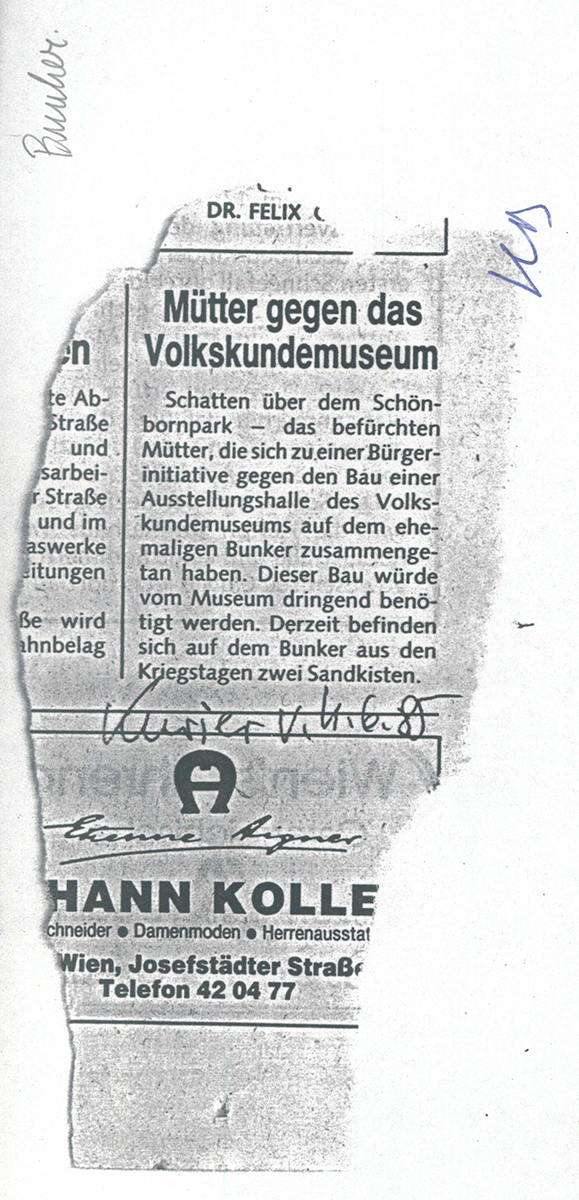
It is no longer possible to precisely reconstruct how events continued to unfold after the spring of 1985 based on the materials from the Volkskundemuseum archive. However, it seems that at least two processes took place: on the one hand, Volkskundemuseum pushed ahead with its plans. In meetings with the relevant city administration authorities and ministry offices6, the museum presented both the proposed adaptation for the building on Laudongasse and plans for a “shelter storey addition”. On the other hand, project plans, which had been shown to district administration leaders and representatives of the political parties at the end of May 1985, seemed to have found their way into the public. The media reported on open resistance to these construction projects within the district. The headlines of district and other newspapers reflected the newly emerged priorities and interest groups discussed earlier: e.g., “Green instead of concrete”, “Green instead of culture”, “Green and culture” or “Mothers against the museum” (Ill. 6).
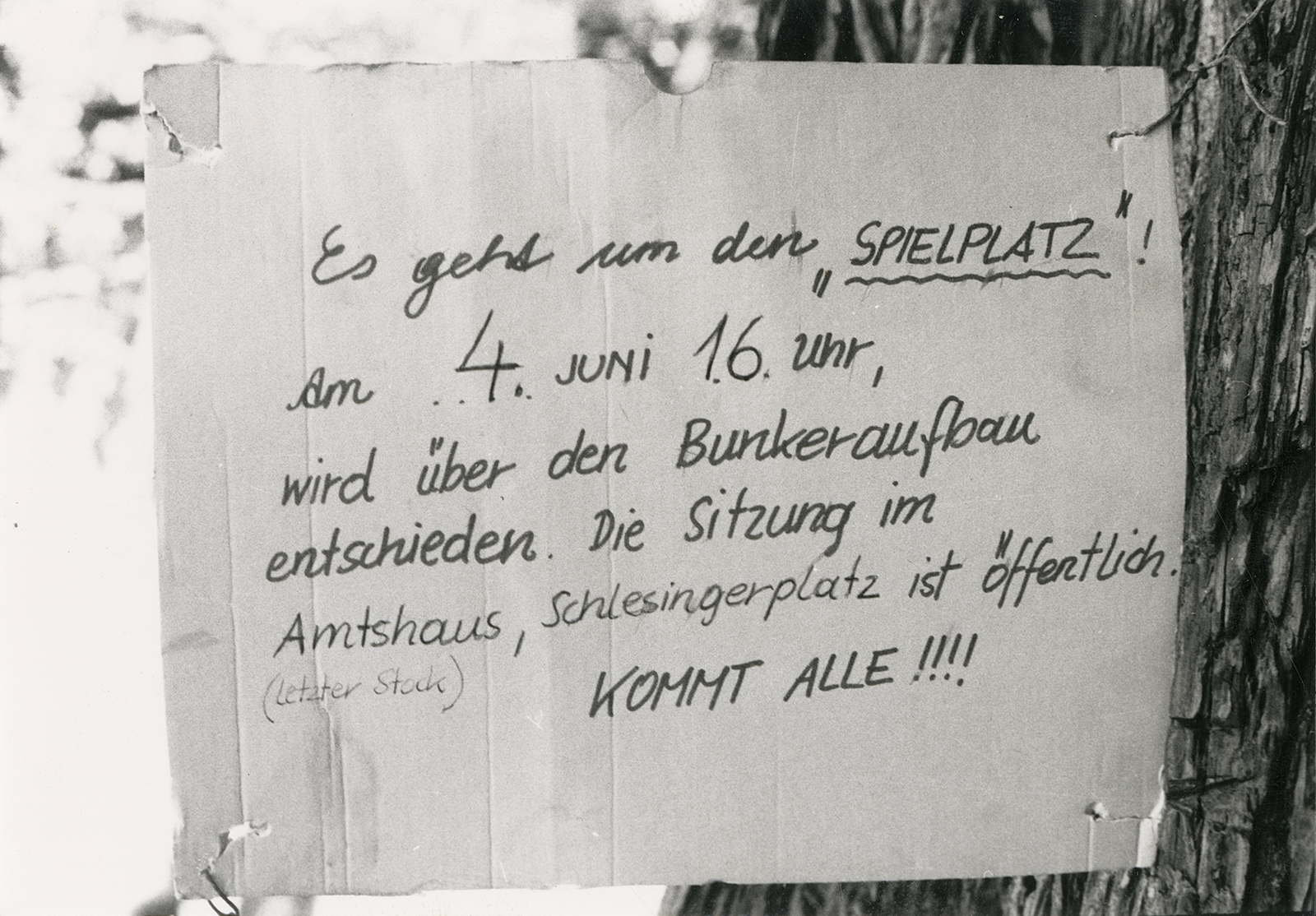
In June 1986, the Bezirksjournal newspaper reported that a “unanimous decision against obstructive construction and for the use and redesign of the shelter surface” had been made in a Josefstadt district council meeting in mid-May. One of the reported reasons for this decision were citizens’ initiatives that wanted to prevent further construction (Ill. 7). Referencing the arguments from the district council meeting, some newspapers accused Volkskundemuseum of not having submitted an official application for a building permit and of not being able to present secured funding for the construction project. The museum’s documentation shows that the museum clearly rejected these claims. Museum management complained about the constantly changing stance of the district council and found that the interests of contemporary cultural policy and museum policy should or could have been a decisive factor in the decision as well.8
The fact of the matter remained that the air-raid shelter continued to pose a structural and aesthetic problem even after the district council’s decision. In June, for example, the MA 42 city administration department calculated the costs for further plans for the building: estimates placed the renovation of the existing building including landscaping at 1.6 million schillings, and the “demolition of the existing structure to 90 cm below park level” at 1.8 million schillings. Due to the high costs for renovation and redesign, as well as any additional follow-up costs, demolition, which would avoid follow-up costs, seemed to be the only viable solution.
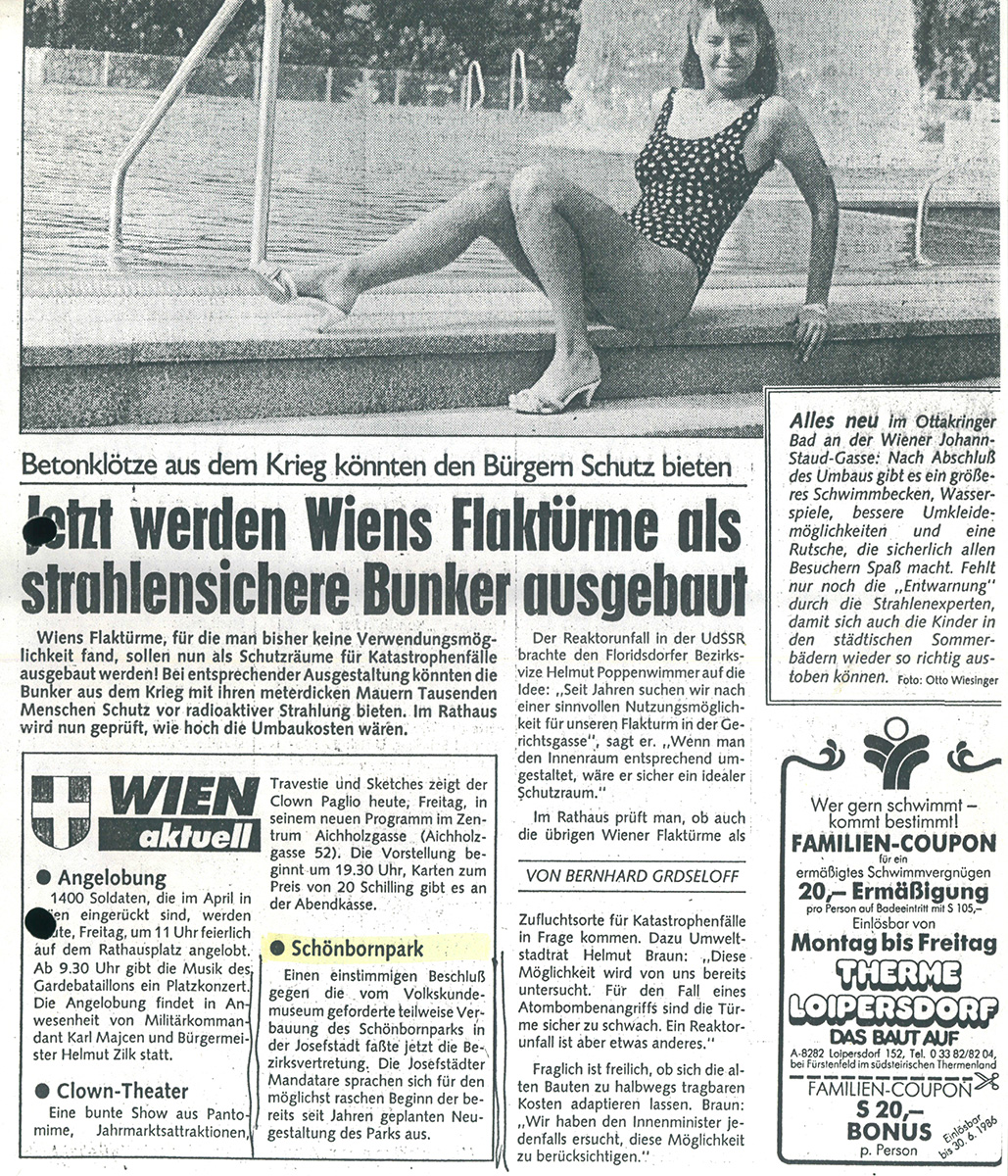
The fact that the shelter still exists today is the result of wider global, or at least European, events. The 1986 devastating reactor accident at the Chernobyl nuclear power plant in Ukraine fuelled the anti-nuclear movement as well as fears of further disasters. The nuclear catastrophe associated with the incident sparked discussions about how and, above all, where the civilian population could be protected – as a newspaper clipping coincidentally containing both the Schönbornpark redesign and the discussion of new flak tower uses shows (Ill. 8).
For Volkskundemuseum, the fact that the shelter was preserved following the nuclear incident meant at least a small consolidation win in the ‘Josefstadt Bunker War’9: 650 square metres of depot space remained and the museum’s investments were not obsolete thanks to the continued existence of the structure. The museum argued – somewhat ambivalently – that it would be “an objectively and politically not justifiable measure to demolish the only existing protective shelter in the 8th district”. This would “contradict the requirements of public cultural asset and civil protection resulting from Chernobyl”10.
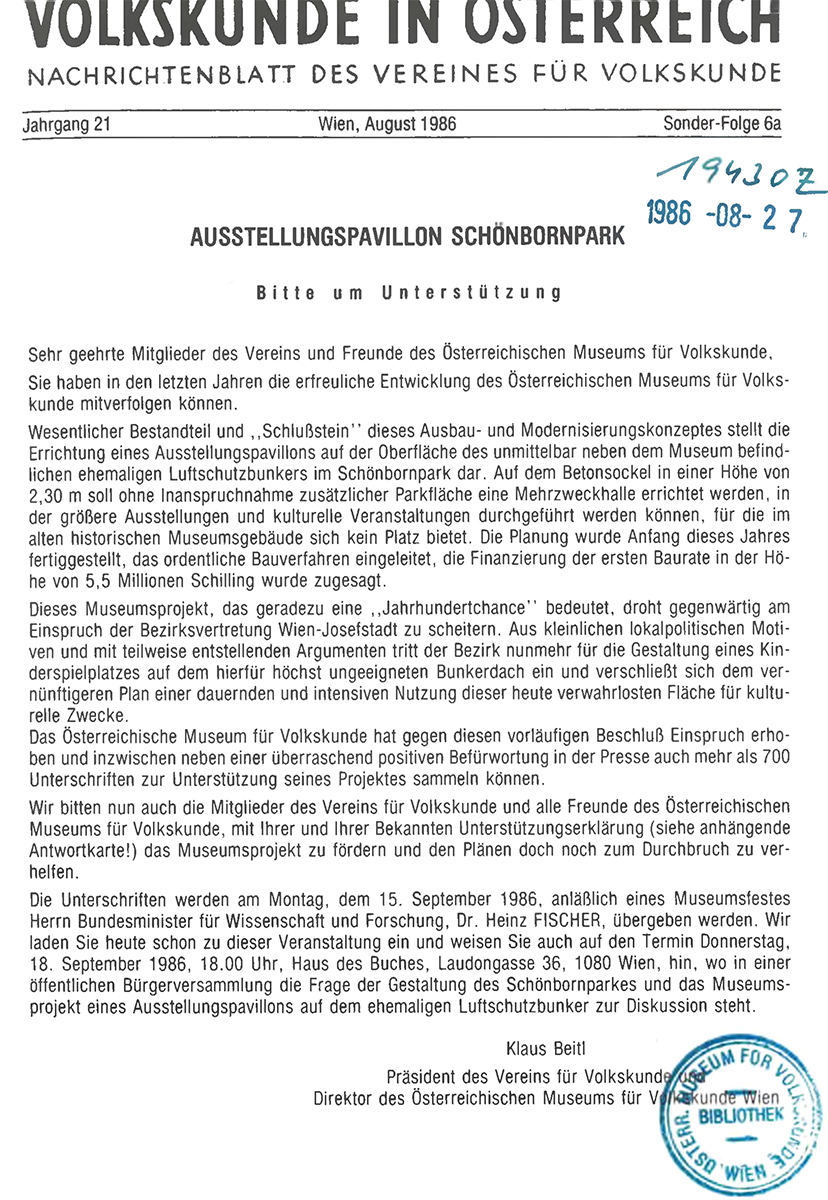
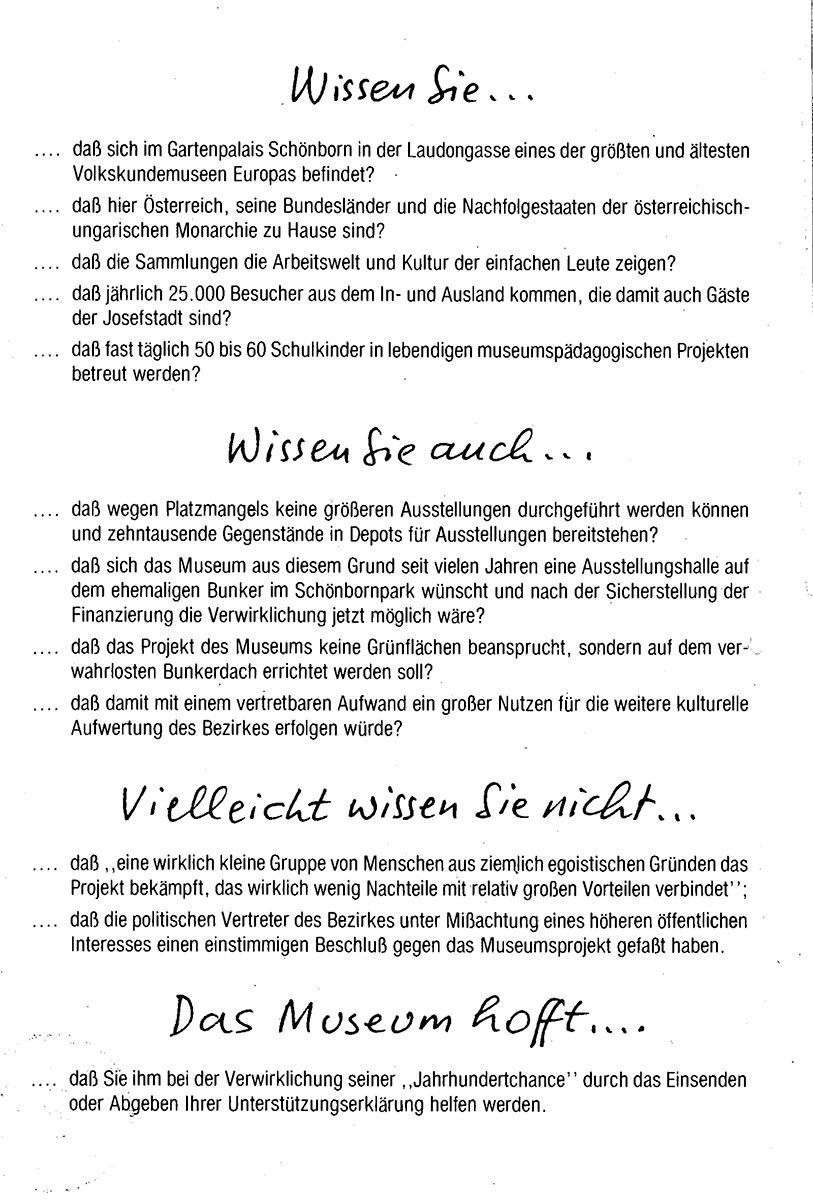
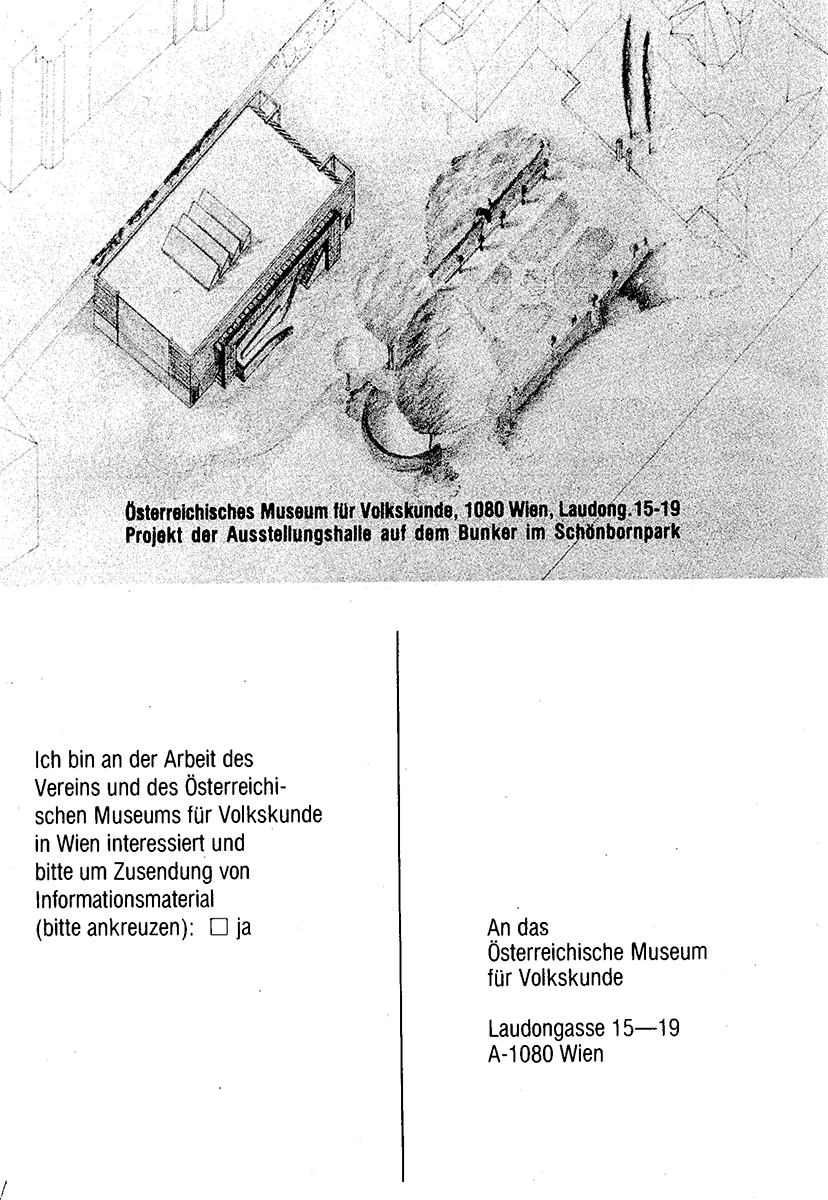
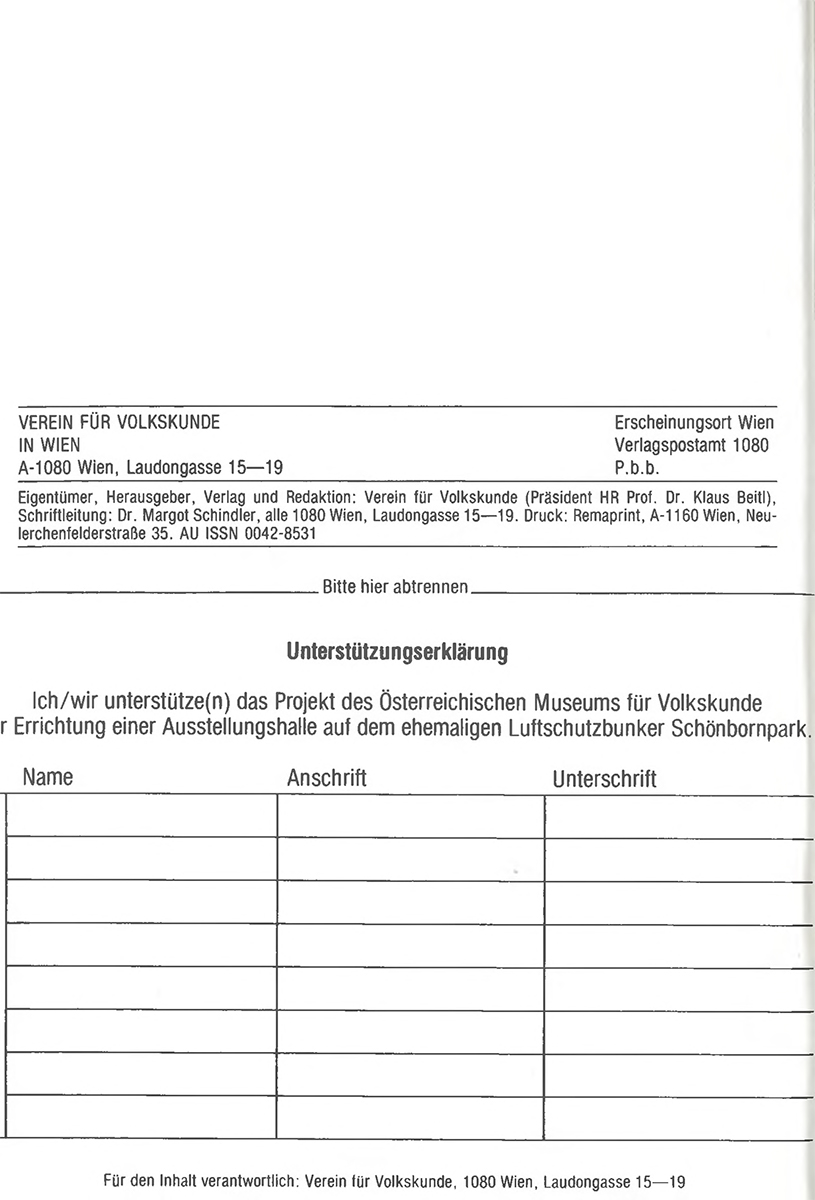
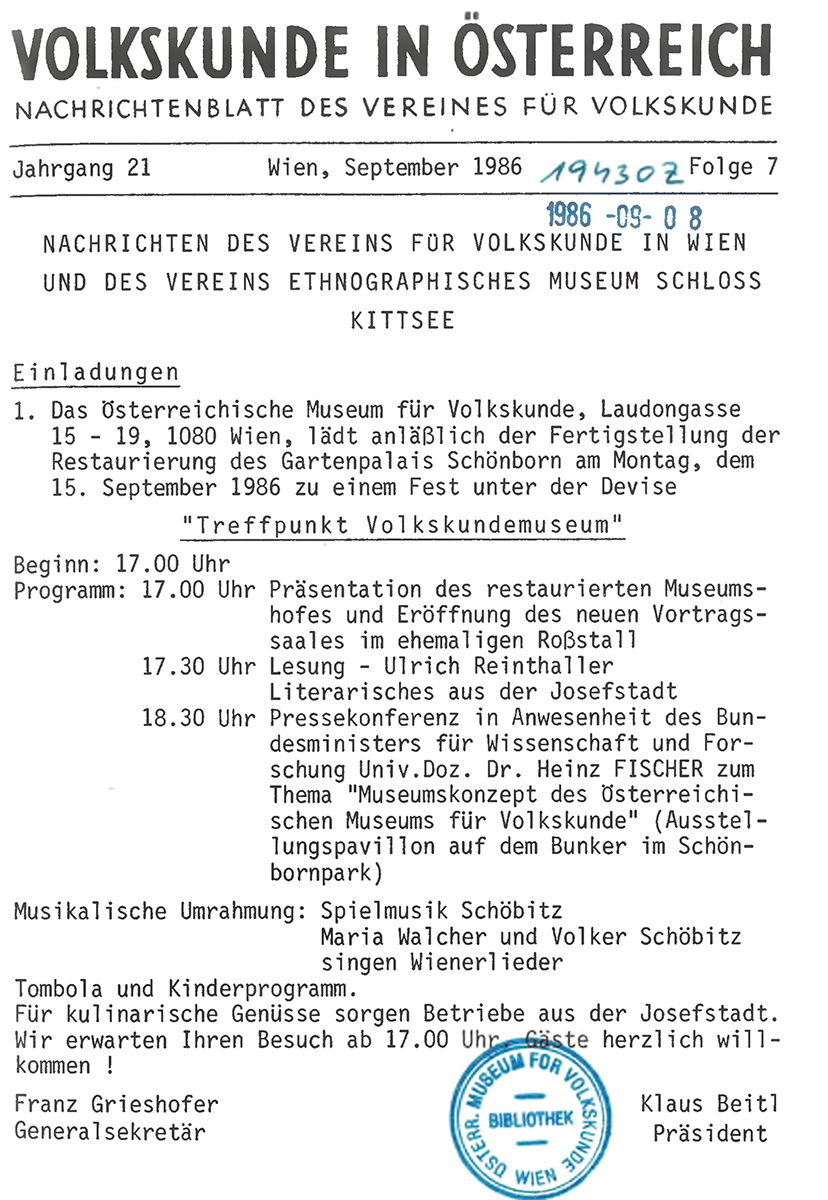
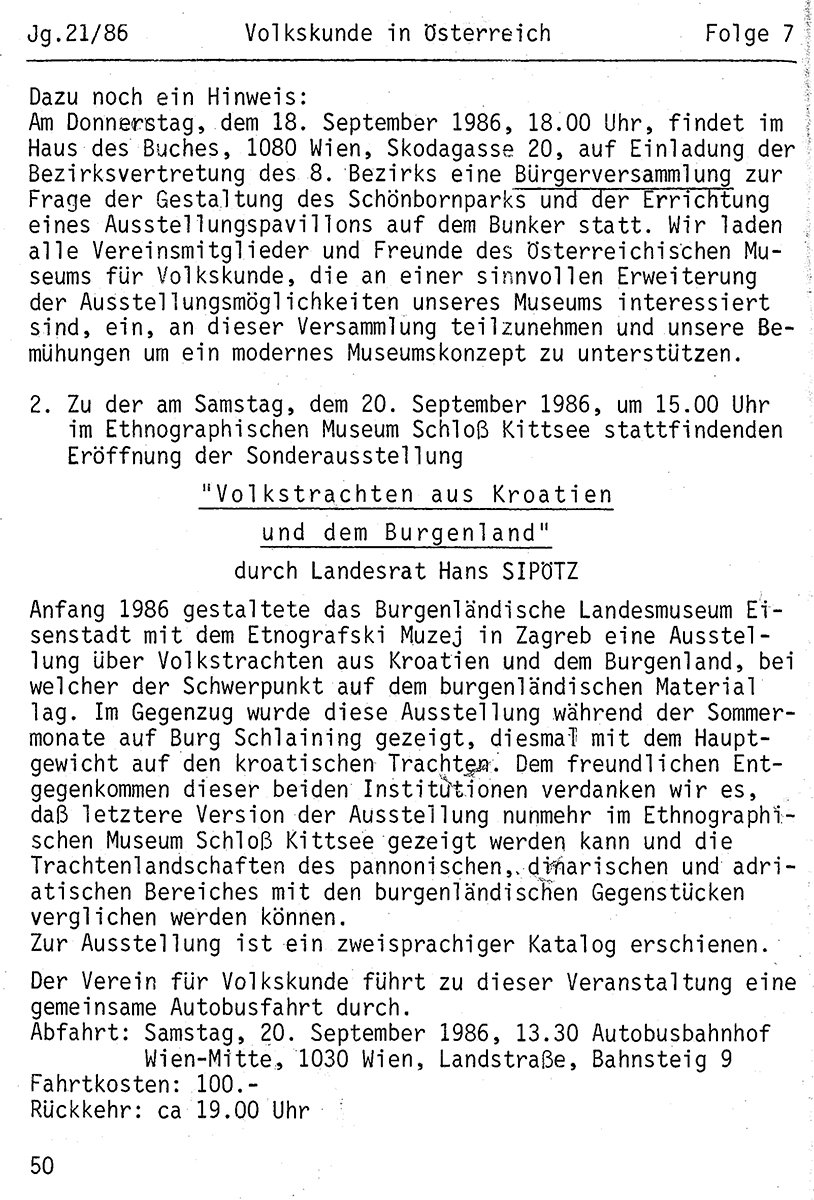
Volkskundemuseum made a final attempt in September 1986. The museum and its then-Director Klaus Beitl – supported by parts of the press and some political decision-makers, e.g., then Minister of Science, Heinz Fischer (*1938), or ‘Central Europe activist’ Erhard Busek (1941–2022)11 – refused to give up plans for an expanded and modernised museum, even against the resistance of the district. The museum launched a leaflet campaign within Josefstadt and also asked colleagues from “professional circles” for support and statements. Furthermore, the museum hosted a festive event including a “citizen discussion” entitled Meeting Point Volkskundemuseum on September 15, after renovation of the inner courtyard and the new lecture hall on Laudongasse had been completed. The event was aimed at drawing attention to the topic one more time. In addition to readings and song performances, a press conference on “museum concepts for the Österreichische Museums für Volkskunde” was held. Furthermore, the museum had reached out to Verein für Volkskunde members and friends of the museum through various channels to explain the situation and highlight the air-raid shelter museum expansion as a “once-in-a-lifetime opportunity”12. (Ill. 9)
Three days later, on 18 September 1986, the hopes of Volkskundemuseum were dashed once and for all. At a town hall meeting convened by the district council, the construction project was rejected.
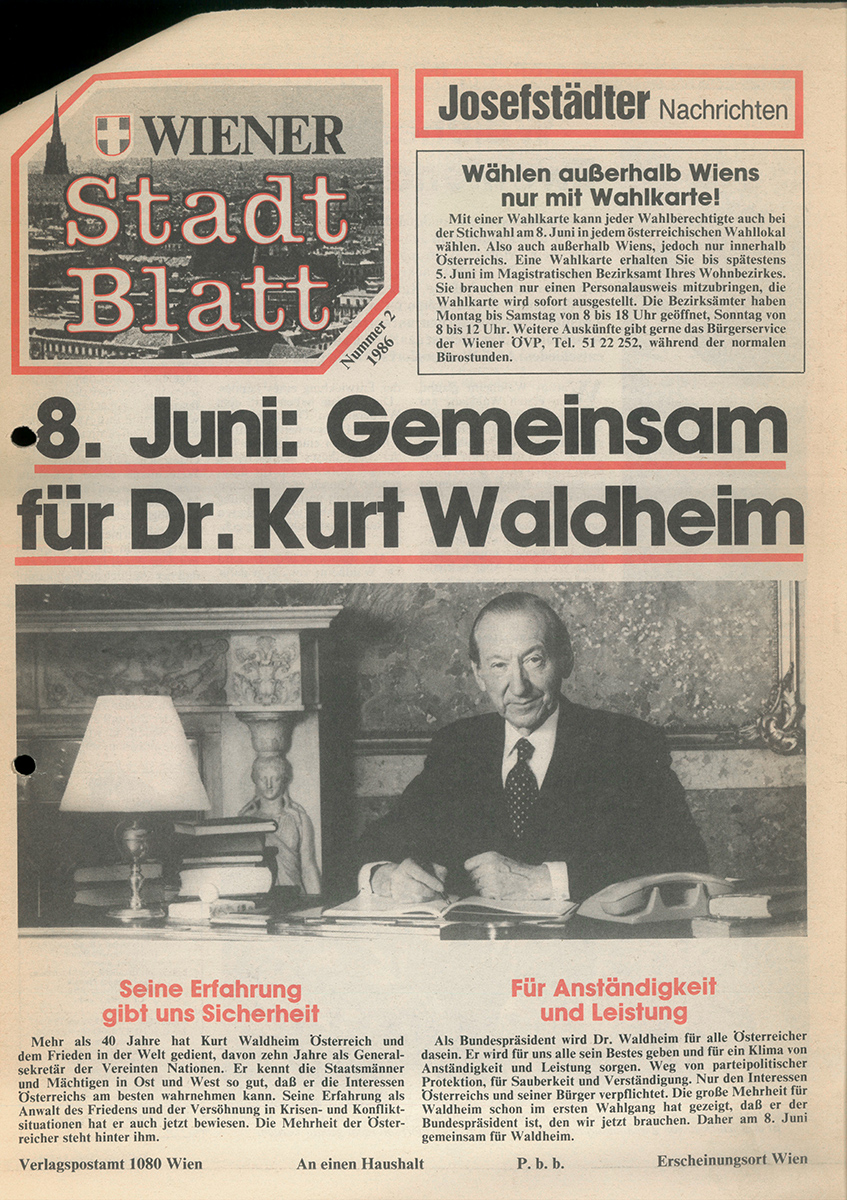
It’s worth mentioning briefly that the Minister of Science, Heinz Fischer, who had been announced to join the press conference in the museum as a supporter of the construction project, did not attend due to “current domestic political events”. Generally, 1986 was a year characterised by the events and decisions surrounding the election of Kurt Waldheim (1918–2007) as Austrian President (‘Waldheim Affair’). A former UN Secretary-General, Waldheim presented himself as a guarantor of peace and a guardian of Austrian interests (Ill. 10), which was no longer accepted without protest by the Austrian public. Rather, Waldheim’s war and Nazi past triggered heated political debates about crimes and Austrian involvement in the Nazi system. Nevertheless, he was elected as president, which contributed significantly to a rethinking of Austrian politics of history and remembrance. Another decisive political and ideological turning point was the ‘coup’ by Jörg Haider to become FPÖ chairman on 13 September 1986. As a result of the Freedom Party’s shift to the right, Federal Chancellor Franz Vranitzky ended the ‘small coalition’ of SPÖ and FPÖ. This marked the beginning of the FPÖ’s rise to become the strongest party in Austria today.
- (Translation); original quote: “die Wahlen sind geschlagen und alle wenden sich wieder den alltäglichen Problemen zu“; “Bürgerversammlung in der Josefstadt. Von Bezirksvorsteher-Stellvertreter Kurt Blümel“; in: westend Josefstadt, No. 5/June 1983, air-raid shelter press museum archive folder, Volkskundemuseum Wien archive, p. 3.
- (Translation); original quotes: “selbstverständlich […] Meinungen und Vorschläge zur Parkgestaltung zu deponieren“; “einfach, zweckmäßig, kindergerecht und benützergerecht“; newspaper clipping “Schönbornpark – Neugestaltung“, westend Josefstadt, No. 2/1984, air-raid shelter press museum archive folder, Volkskundemuseum Wien archive, p. 16.
- (Translation); original quote: “Kinder und Jugendliche etwa wollen unter anderem eine Rutsche, verbesserte Ballspielplätze und ein Schwimm- oder Planschbecken, 20- bis 40-jährige eine Verbesserung des Babyspielplatzes und für die Verbauung des Bunkers, wie sie vom Volkskundemuseum vorgeschlagen wird, sprechen sich vor allem Vertreter der Altersgruppe über 40 aus“; newspaper clipping “Lenaugasse und Schönbornpark“, westend No. 3/1984, air-raid shelter press museum archive folder, Volkskundemuseum Wien archive, p. 4. [The results of this survey were never published in detail.]
- (Translation); original quote: “Obwohl er nicht zu den riesigen Monstren aus Kriegstagen zählt, sorgt er hier für ein schlechtes Gesamtbild“; newspaper clipping “Neugestaltung eines Parks: Ideen sind vorhanden“, unabhängiges Journal, September 1984, air-raid shelter press museum archive folder, Volkskundemuseum Wien archive, p. 2.
- (Translation); original quotes: “der Not eine Tugend machen“; “eine Spielfläche nach den Wünschen der Kinder errichten“; “eine Oase der Erholung, Entspannung und des Spiels zu machen“; ibid.
- IIn an archived dodcument, Volkskundemuseum (presumably Klaus Beitl) compiled a chronology of events from the viewpoint of the museum (“Chronologie der Ereignisse aus der Sicht des Österreichischen Museums für Volkskunde in Wien)“, dating from 1983. This document states that on 26 March 1985, a staff meeting took place with the Federal Ministry of Science and Research, the City Council Directorate, Departments MA 25, 26, 42 and 52, as well as the Federal Monuments Office and the District Council. Air-raid shelter exhibition hall 1982–1987 archive folder.
- Newspaper clipping “Schönbornpark: Der Bunker wird nun nicht verbaut!“, Bezirksjournal No. 6/1986, p. 3.
- Volkskundemuseum document “Einige Argumente zum Ablauf der Ereignisse und zu irreführenden Pressemeldungen“, 15 June 1986/HL, air-raid shelter exhibition hall 1982–1987 archive folder.
- Cf. Peter Zehrer: Josefstädter Bunkerkrieg. Das Museum für Volkskunde kämpft um seinen Lebensraum. Die Presse, 8 September 1986, p. 3.
- (Translation), original quotes: “sachlich und wohl auch politisch nicht vertretbare Maßnahme [sei], den einzigen vorhandenen Schutzraum des 8. Bezirkes zu demolieren“; “im Widerspruch zu den nach Tschernobyl aktualisierten Erfordernissen des öffentlichen Kulturgüter- und Zivilschutzes“; Volkskundemuseum document: “Chronologie der Ereignisse aus der Sicht des Österreichischen Museums für Volkskunde in Wien“, probably the second half of 1986, air-raid shelter exhibition hall 1982–1987 archive folder.
- Cf. Martin Schweighofer: Reif für die Insel. In: Wochenpresse, 22 July 1986, p. 44ff.
- Cf. Franz Grieshofer: Jahresbericht des Vereins und Österreichischen Museums für Volkskunde für 1986. ÖZV 90/1987, p. 144ff.