Air-Raid Protection at Volkskundemuseum Wien
Operational and personal protection
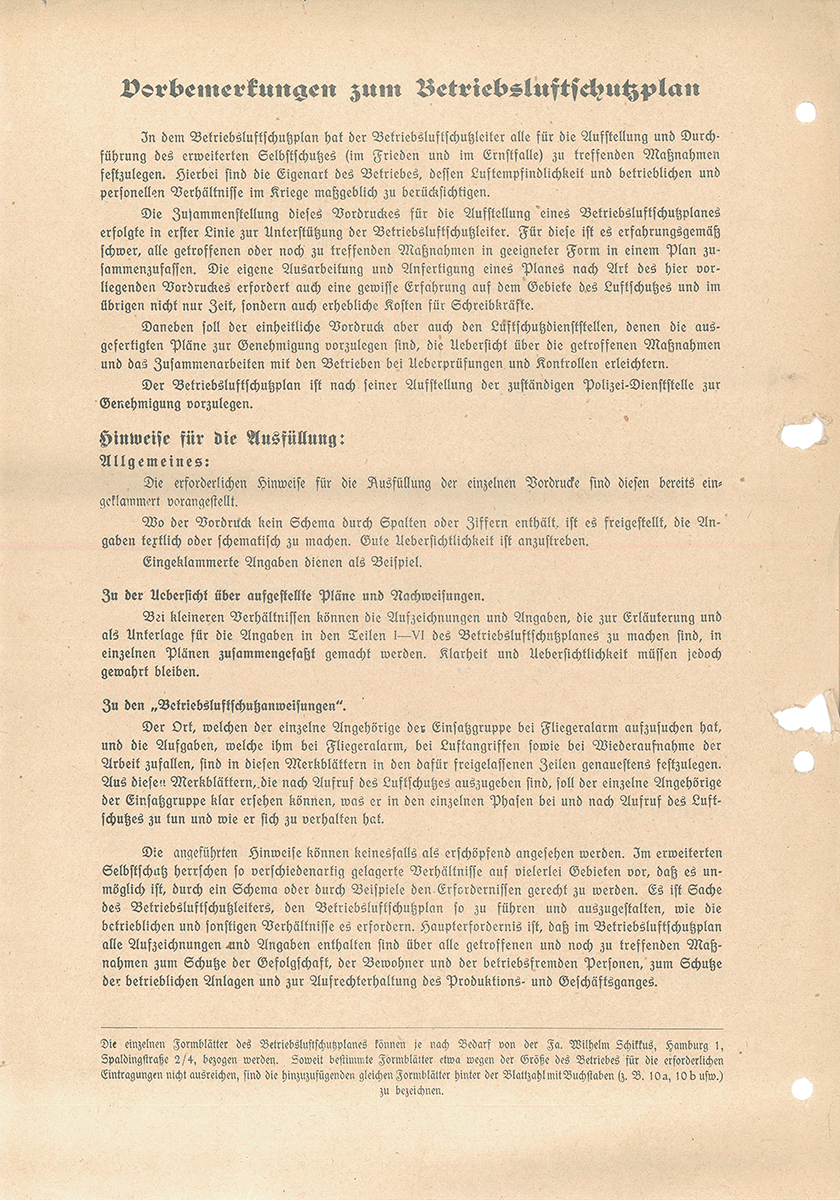
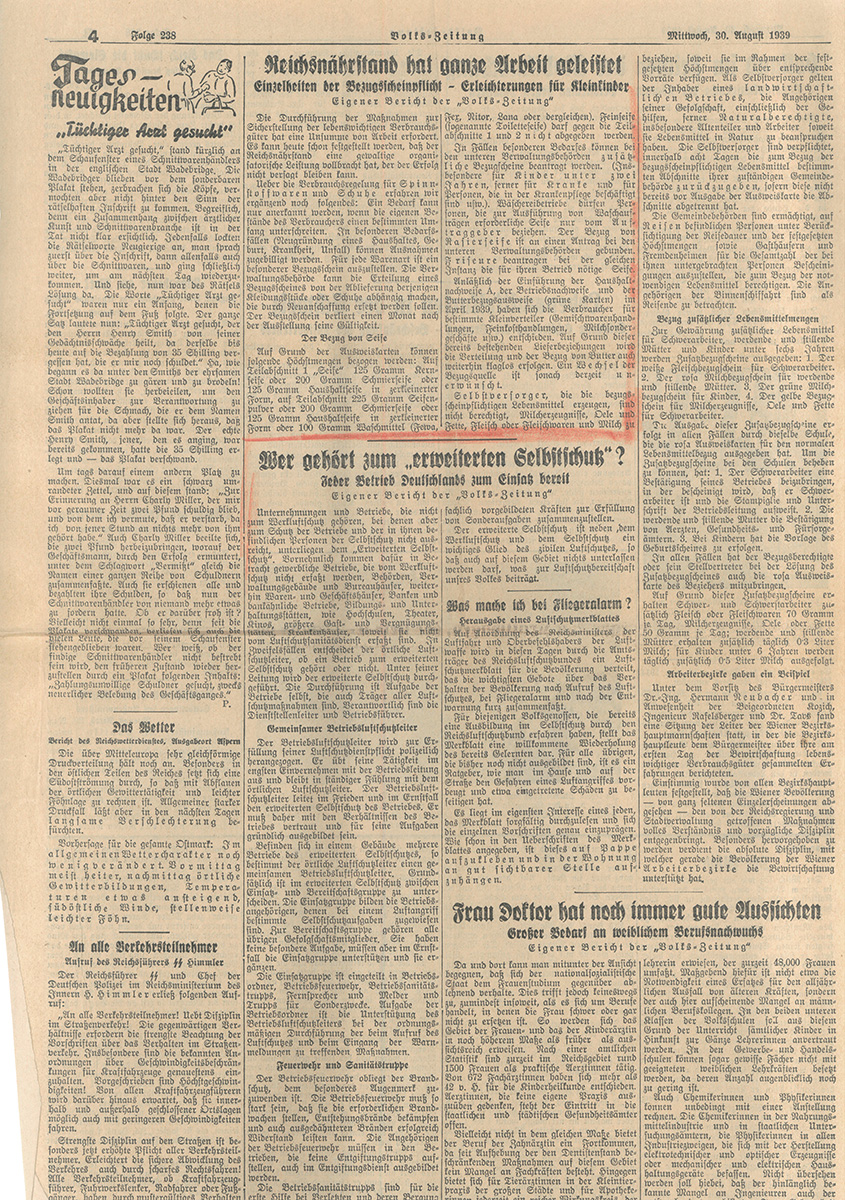
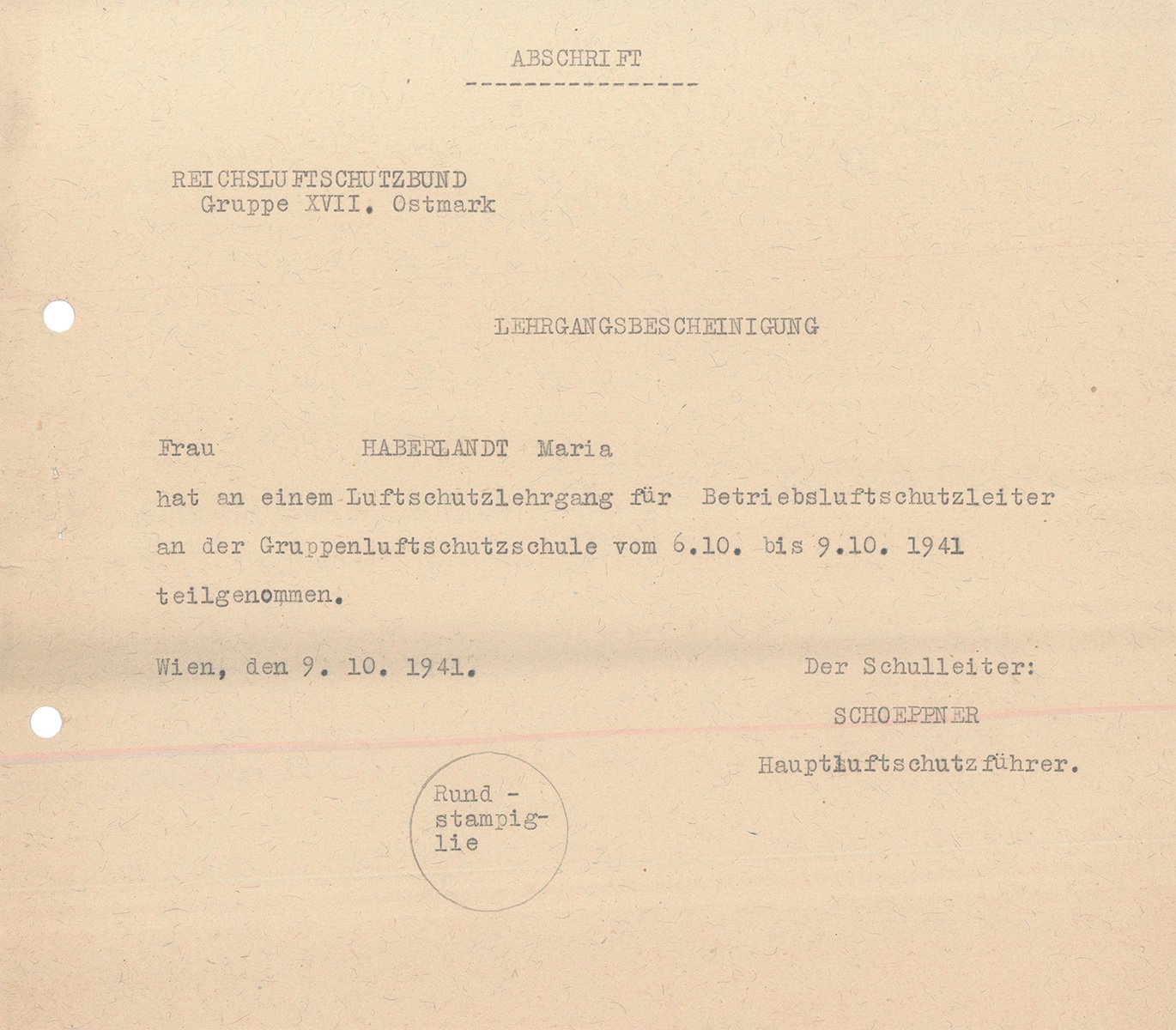
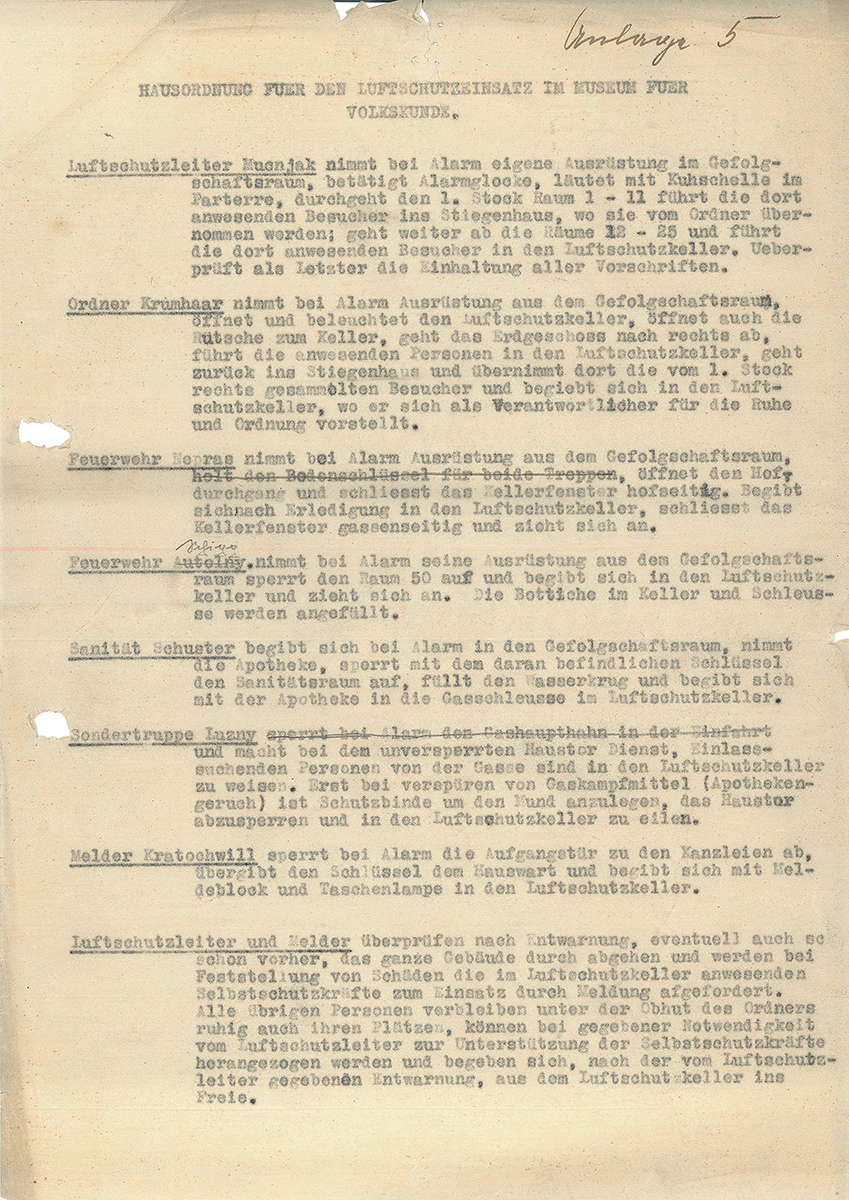
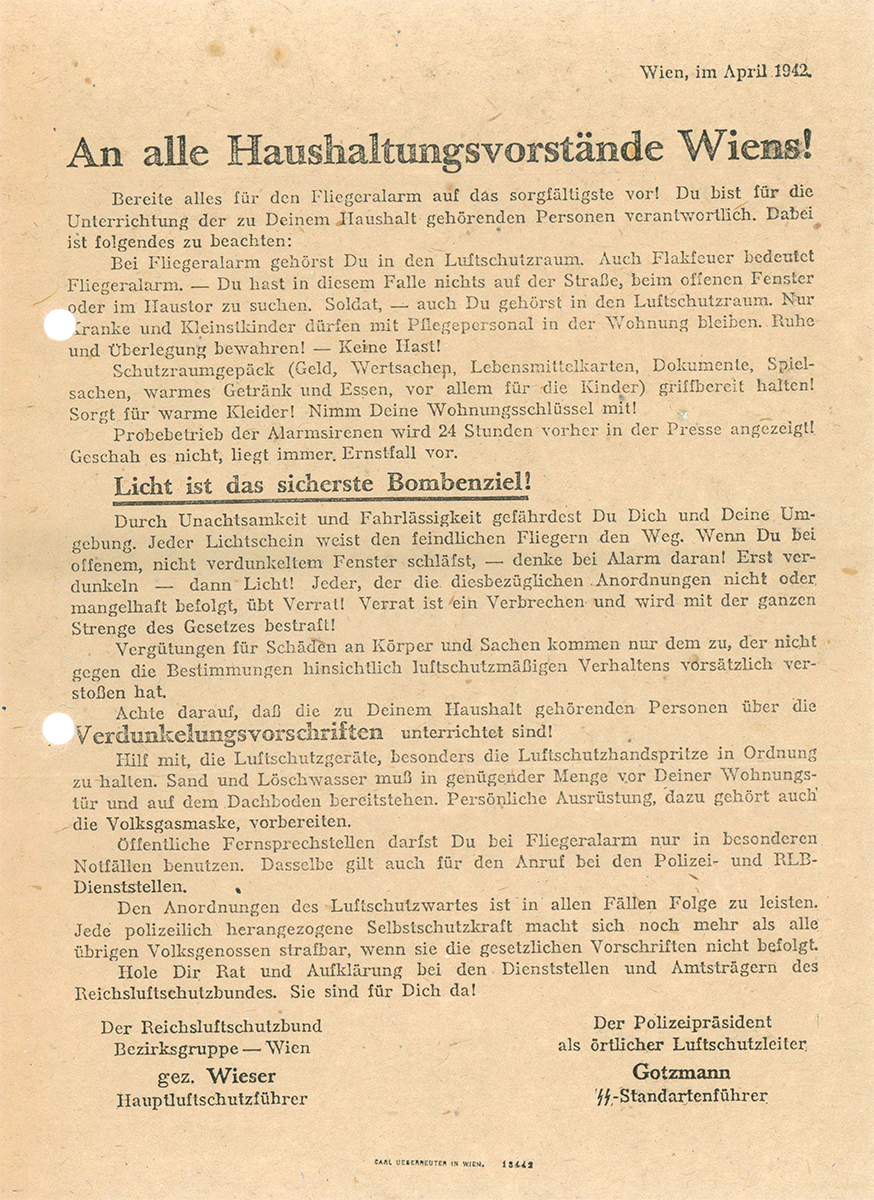
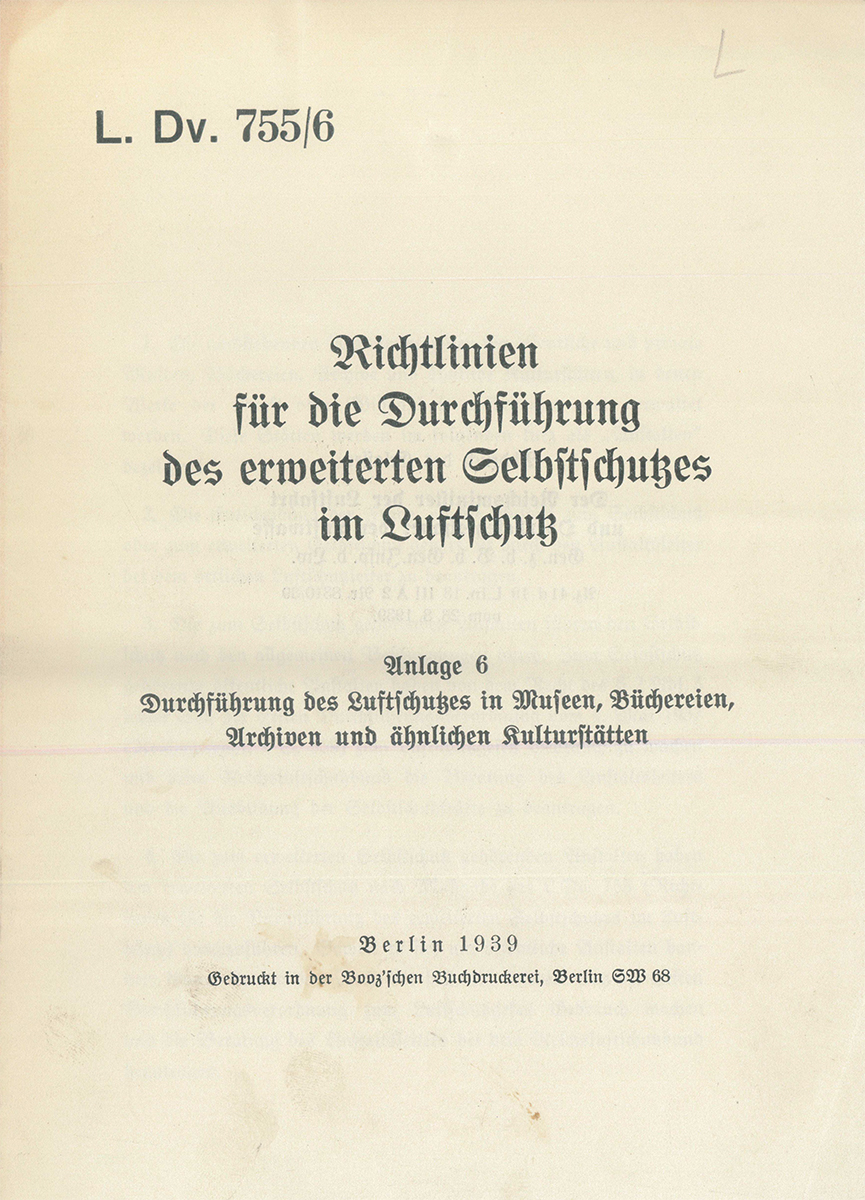
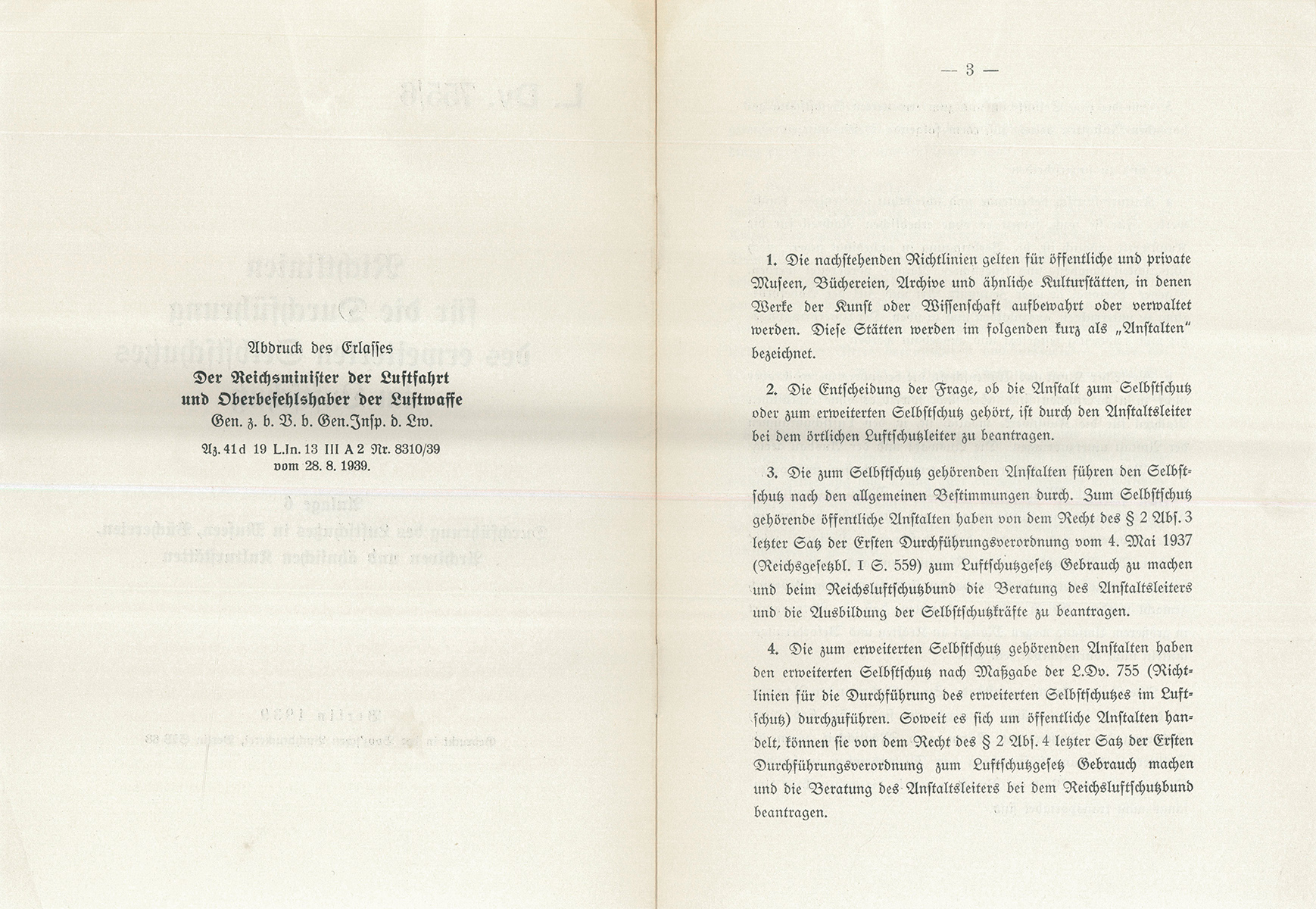
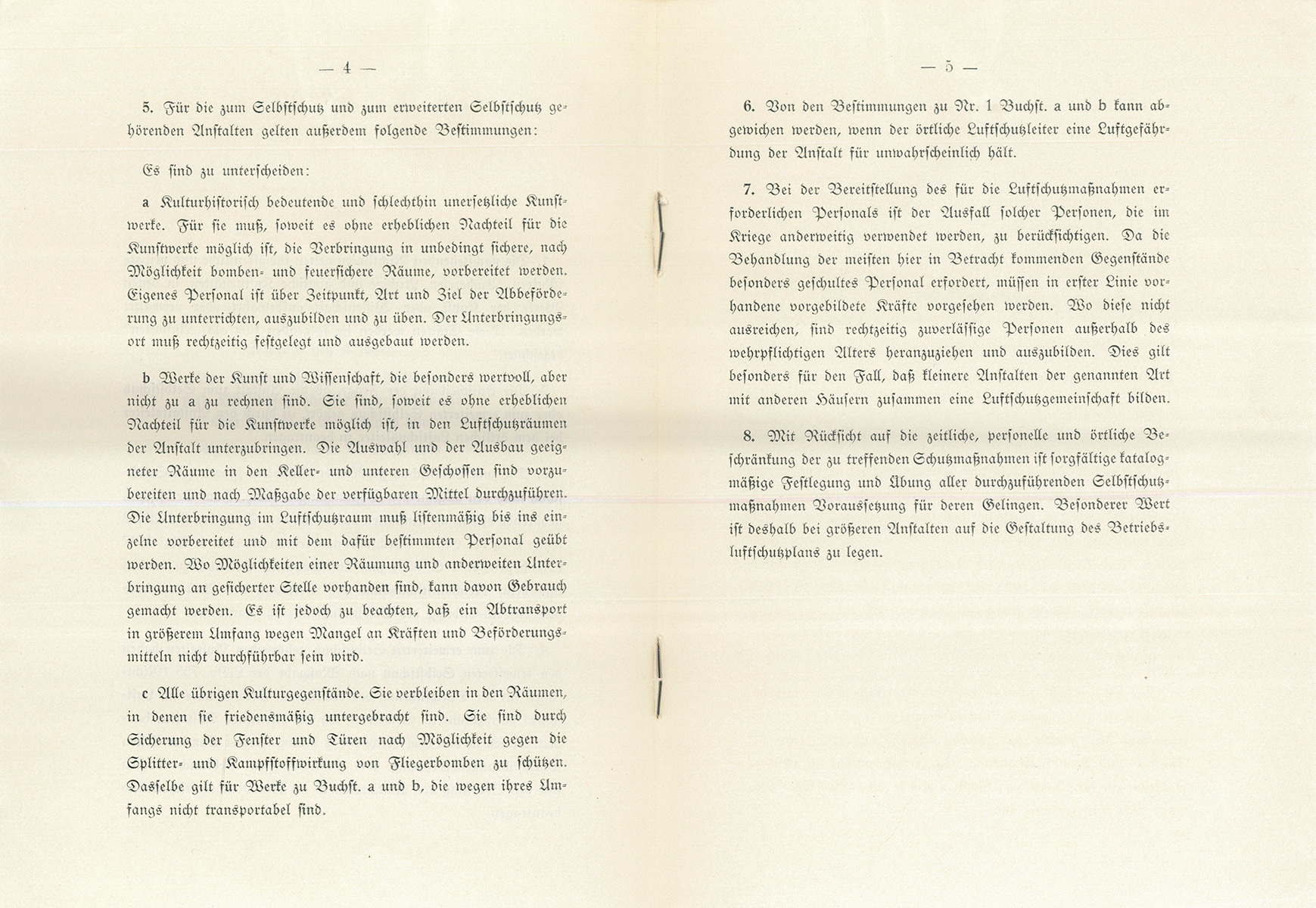
Volkskundemuseum Wien filled out a pre-printed Operational Air-Raid Protection Plan (Ill. 1) in August 1939 in accordance with the “Extended Self-Protection in Air-Raid Protection” (Ill. 2). The museum’s Director at the time, Arthur Haberlandt (1889–1964), a regime-sympathiser, originally appointed himself as ‘operational air-raid protection director’. The position was supported by a deputy and additional staff members from the museum team. They were all required to complete specific air-raid and fire safety training (Ill. 3). In the event of an air-raid, these trained employees were to carry out tasks according to a pre-defined procedure (Ill. 4).
The air-raid protection staff changed over the course of the war as male employees were drafted into military service. While Haberlandt served, his wife Maria (1887–1978) took over the museum’s administrative and managerial duties1, as well as the role of ‘operational air-raid protection director’. Volkskundemuseum generally resembled a family business: Haberlandt succeeded his father Michael (1860–1940) as museum Director in 1924. His two children, Wolfgang (1922–1945) and Gertrude (1923–2016), were also employed at the museum. Wolfgang Haberlandt, later killed in the final days of the war, had already been groomed as a potential successor.
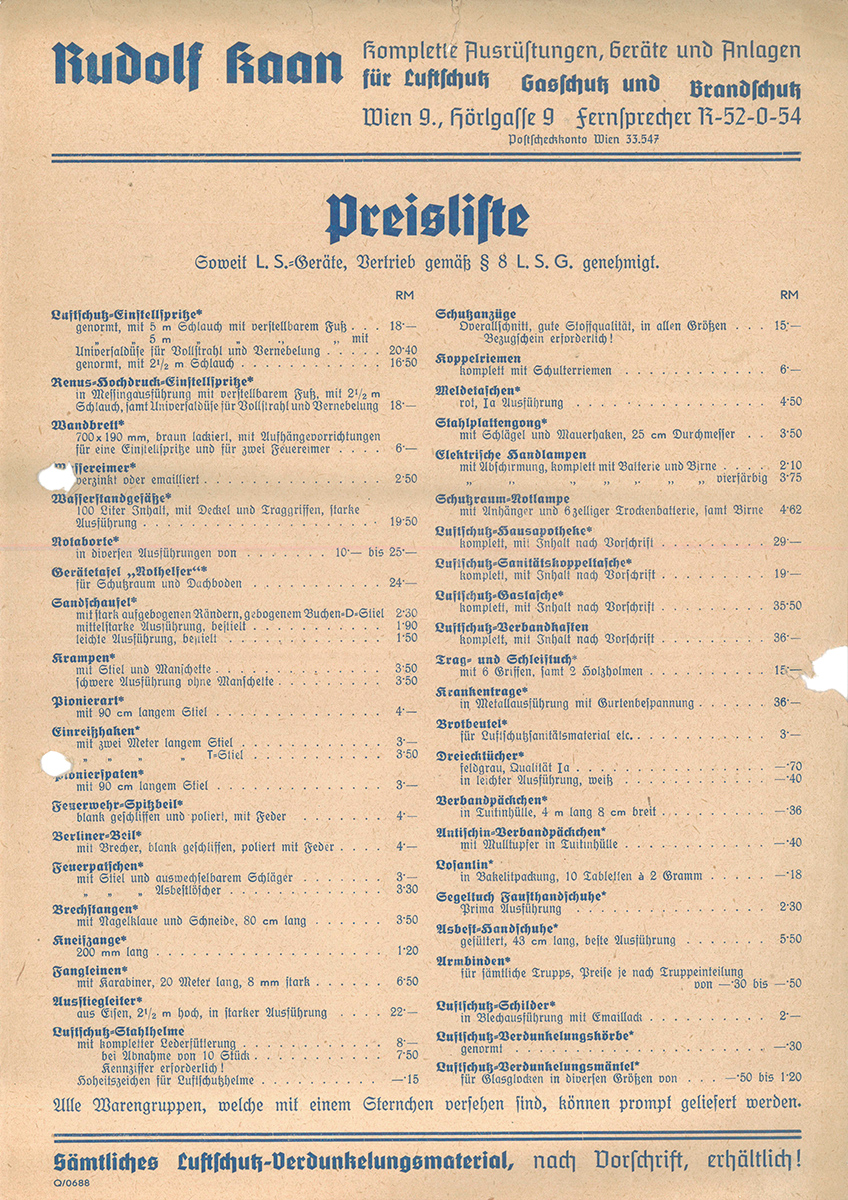
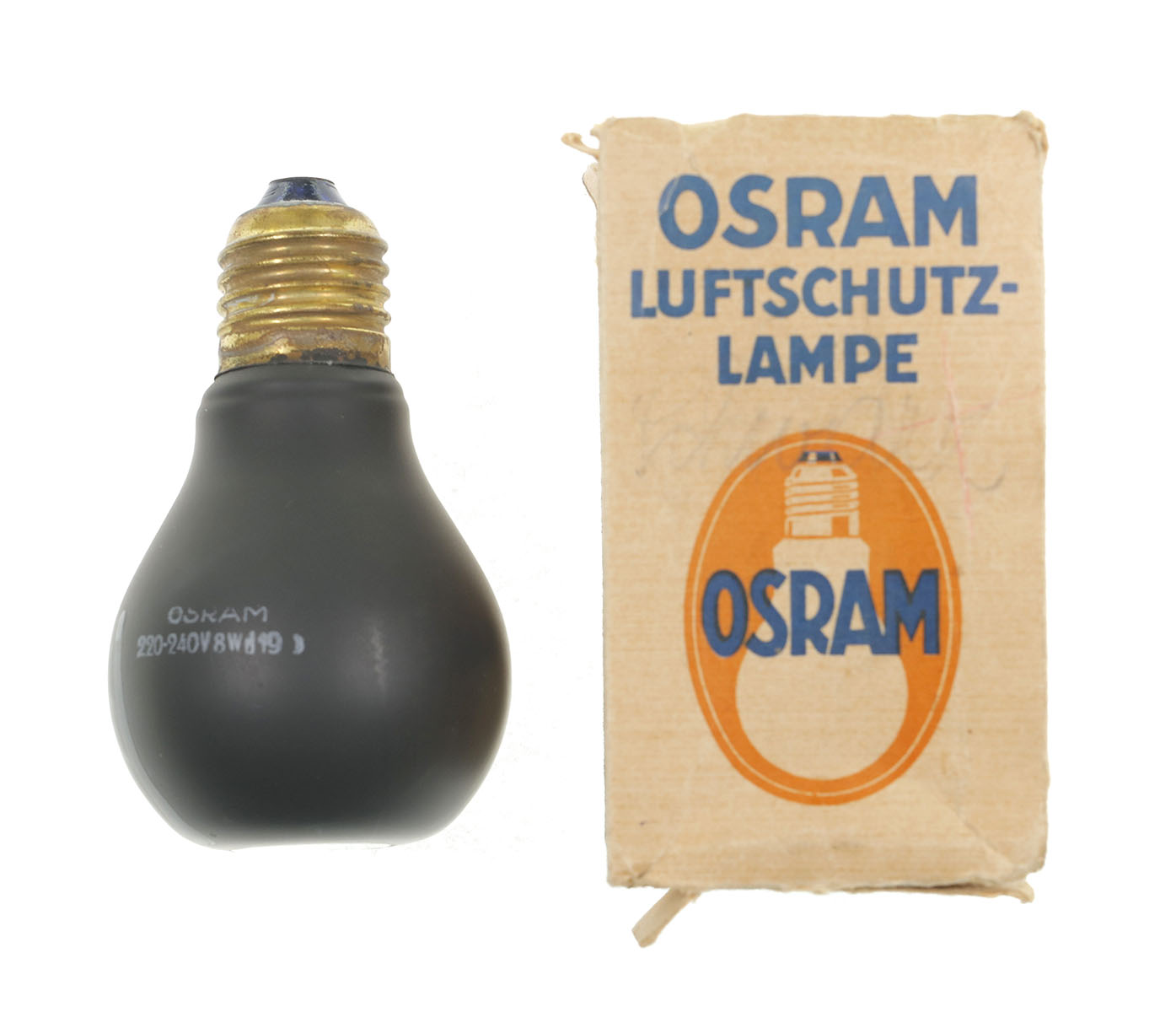
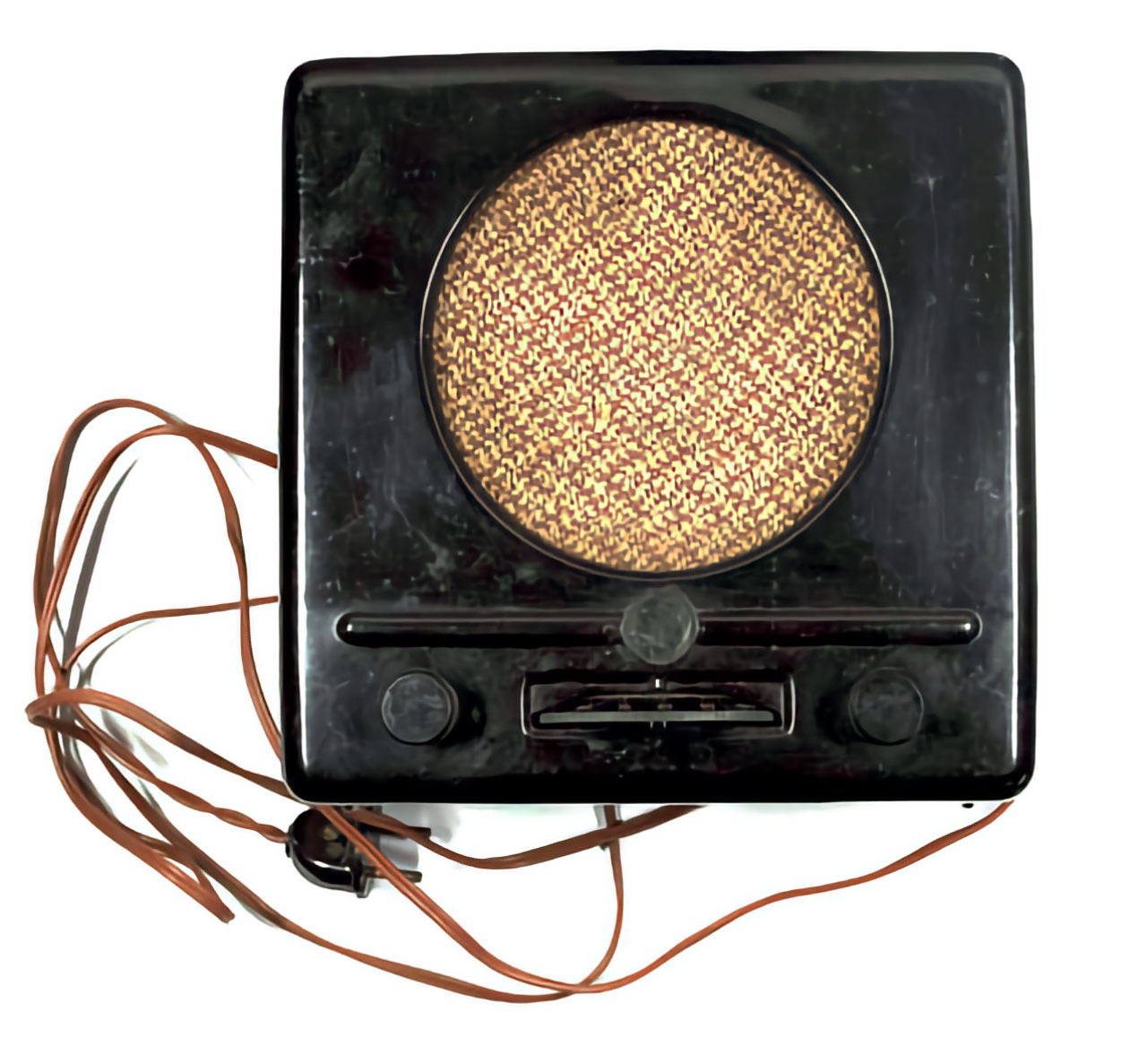
The Operational Air-Raid Protection Plan was to be updated repeatedly until the end of the war with regard to the staff as well as the existing air-raid shelters and equipment. Although a fair amount of equipment was necessary (Ill. 5), none of the items used in the museum at that time has survived. Only three objects in the collections refer to air-raid protection measures taken during World War Two: an instruction manual for an air-raid mask, an air-raid lamp (Ill. 6) and a Volksempfänger (people’s receiver; Ill. 7). Similar air-raid lamps2 were used in the museum; along with blinds, they were part of the mandated blackout measures (Ill. 8). The museum did not acquire its own Volksempfänger, through which the Nazi regime disseminated its ideological indoctrination, until after mid-1944. Before that, the museum had no radio “with which, when normal radio reception was cut off, news of air raids could be heard […]”3.
Starting in May 1943, museum staff were supported by a seven-member Wehrmacht Auxiliary Unit (Wehrmachtshilfskommando), which took over fire watch duties at night.4 In an emergency, a declaration of support existed from the nearby Gau office of the Kraft durch Freude Nazi organisation at Laudongasse 16 (8th district), as well as the option to request assistance from the nearby police station.5 This station located at Fuhrmanngasse 8 (8th district) was the responsible authority for air-raid protection at the museum. It approved the Operational Air-Raid Protection Plan and ordered air-raid drills.6
Object protection
In air-raid protection meeting held in July 1939, it was announced that all museums in Vienna had to classify their objects according to three priority categories (A, B and C) as soon as possible (Ill. 9).7 As a result, Volkskundemuseum – with its Director assigning the objects primarily to category B – set up its own air-raid cellar as quickly as possible.8 Starting in May 1942, decrees issued at the Reich level (the highest level in the Nazi administration) furthered measures for securing museum objects.9 At Volkskundemuseum, these precautions were perceived as “extremely burdensome” due to a lack of resources, but were nevertheless implemented (Ill. 10). The primary focus at that time was on salvaging wooden objects.10 In total, the museum’s holdings in the early 1940s consisted of an estimated 45,000 objects and more than 10,000 books. In 1943, Haberlandt used these vast quantities as an argument in his request to receive heavy labour supplement cards for the staff for carrying out this kind of salvage work.11
Despite ongoing efforts to secure the objects, the museum remained open to the public until 13 August 1943.12 After closing, Volkskundemuseum intensified packing and salvage operations, which lasted until at least December 1943.13 Following increasing air raids on Vienna, at the end of February 1944, Haberlandt finally ordered the fastest possible transport of individual objects to the second alternative location designated for Volkskundemuseum, which was Laudon Castle (14th district).14 The Director’s private residence (19th district) is listed as the first alternative storage site (Ill. 11). At the end of March 1944, objects were once again moved to the 14th district15; and in early May 1944, Haberlandt reported “that all essential collections are now housed in air-raid-proof locations to the greatest extent possible”.16
According to the surviving object inventories, 27 wooden objects were transferred to Laudon Castle.17 Their return was initiated shortly after the end of the war18; the return was completed, at the latest, by early December 1945.19 According to the archived records, Volkskundemuseum lost no objects due to air raids or other combat operations.
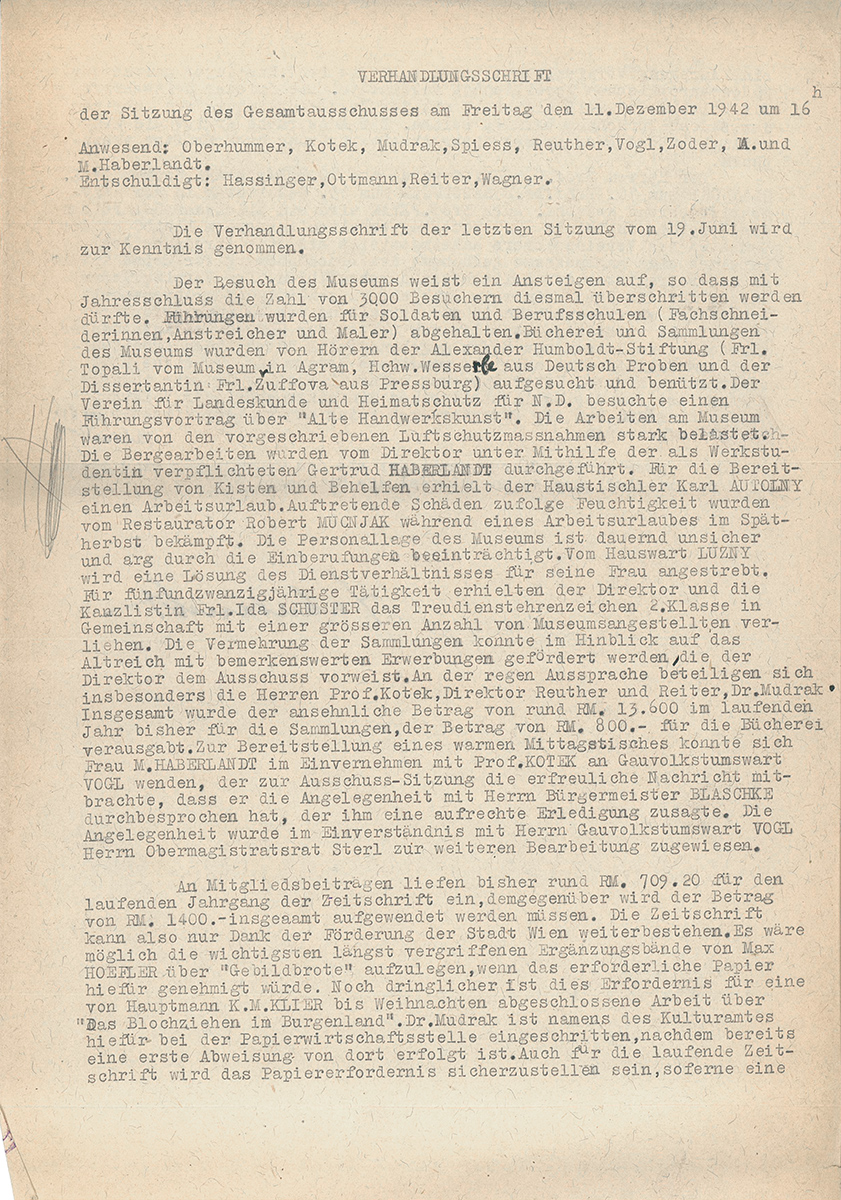
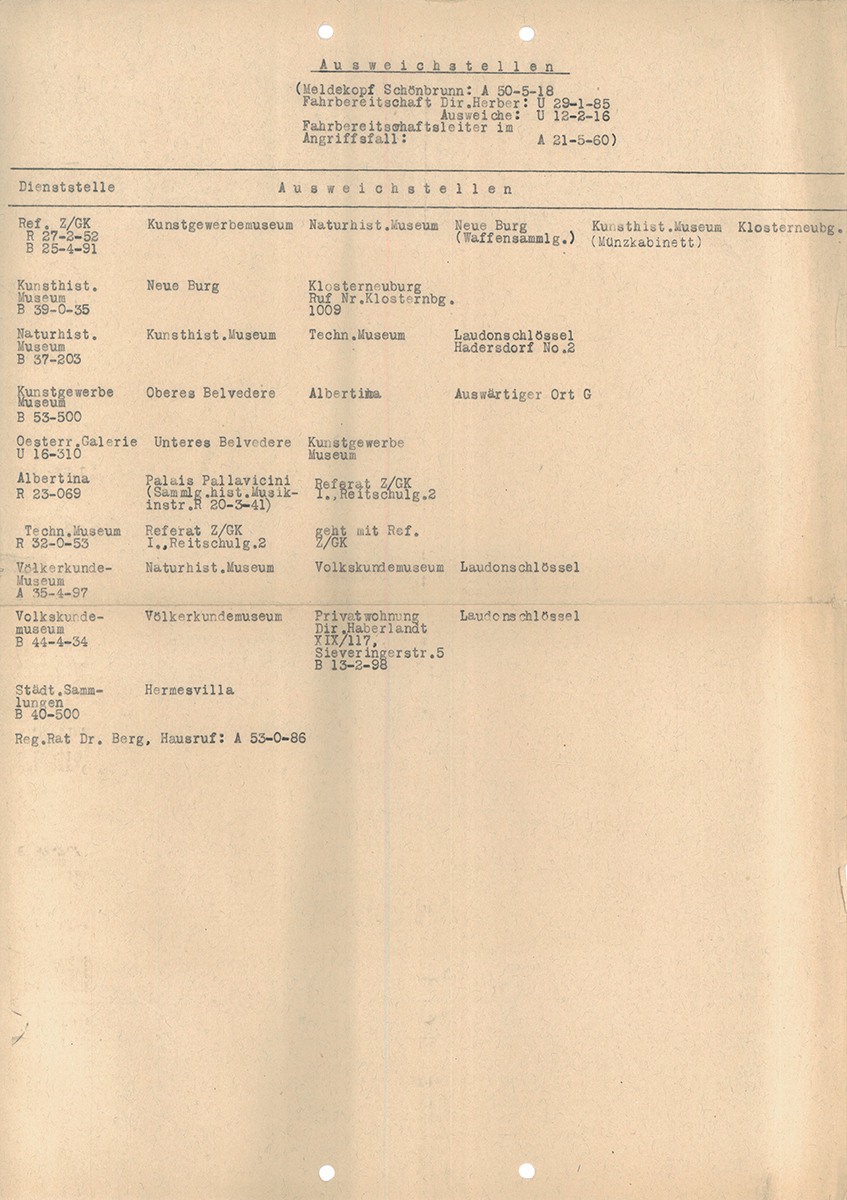
Air-raid shelters and rescue rooms
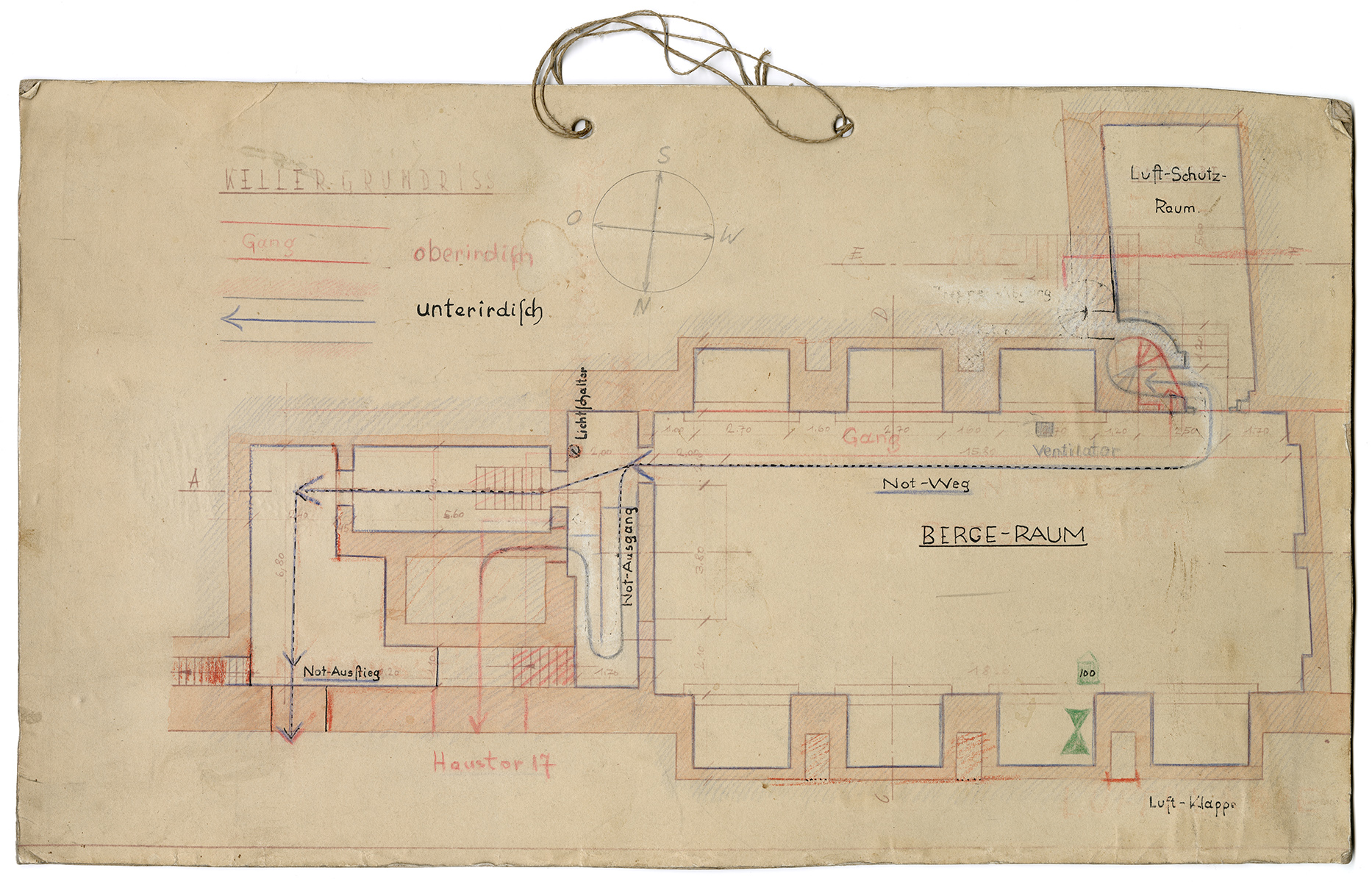
Air-raid shelters, necessary for the protection of people and property, were erected in the Garden Palace in its 146-square-meter vaulted cellar and in additional places. Initial structural measures were taken to make the cellar gas-tight and collapse-proof. The museum also filled a well shaft, levelled the floor20 and prepared a “stepped conveyor track”21 from the ground floor to be able to transport objects in packed boxes. The cellar was completed in early 1940 with the installation of gas-tight doors and shutters (Ill. 12 and 13).22 By July 1941, it had its own telephone system and an emergency exit.23
The air-raid cellar was designed to accommodate 70 people. In addition to the staff and the audience present, residents from the neighbouring Laudongasse 21 (8th district) would also take refuge in the shelter.24
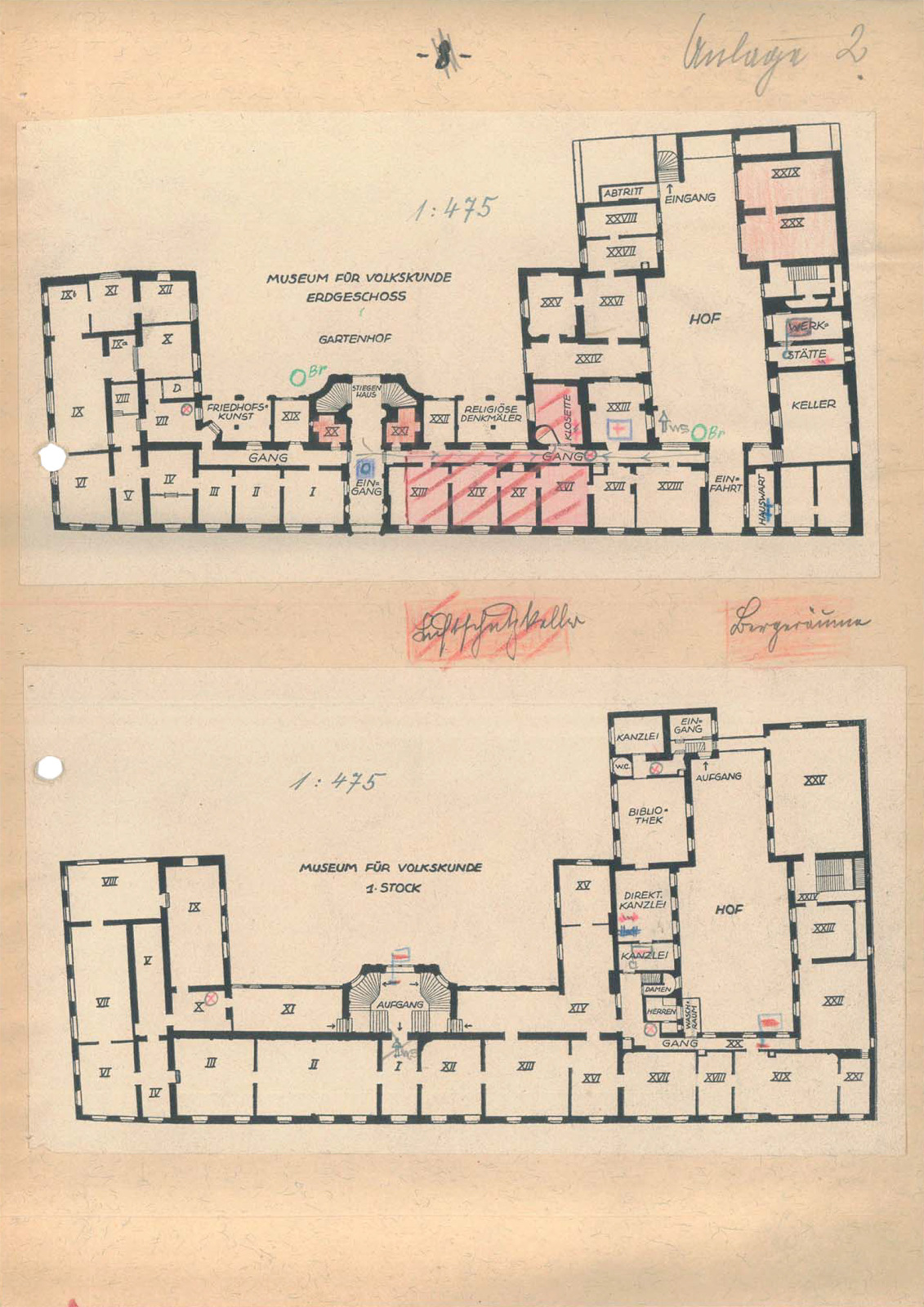
Initially, four rooms on the ground floor (Ill. 14) were used to store objects; by February 1943, objects were stored in the air-raid cellar25 and in the “air-raid shelter hall”26, which can no longer be identified.
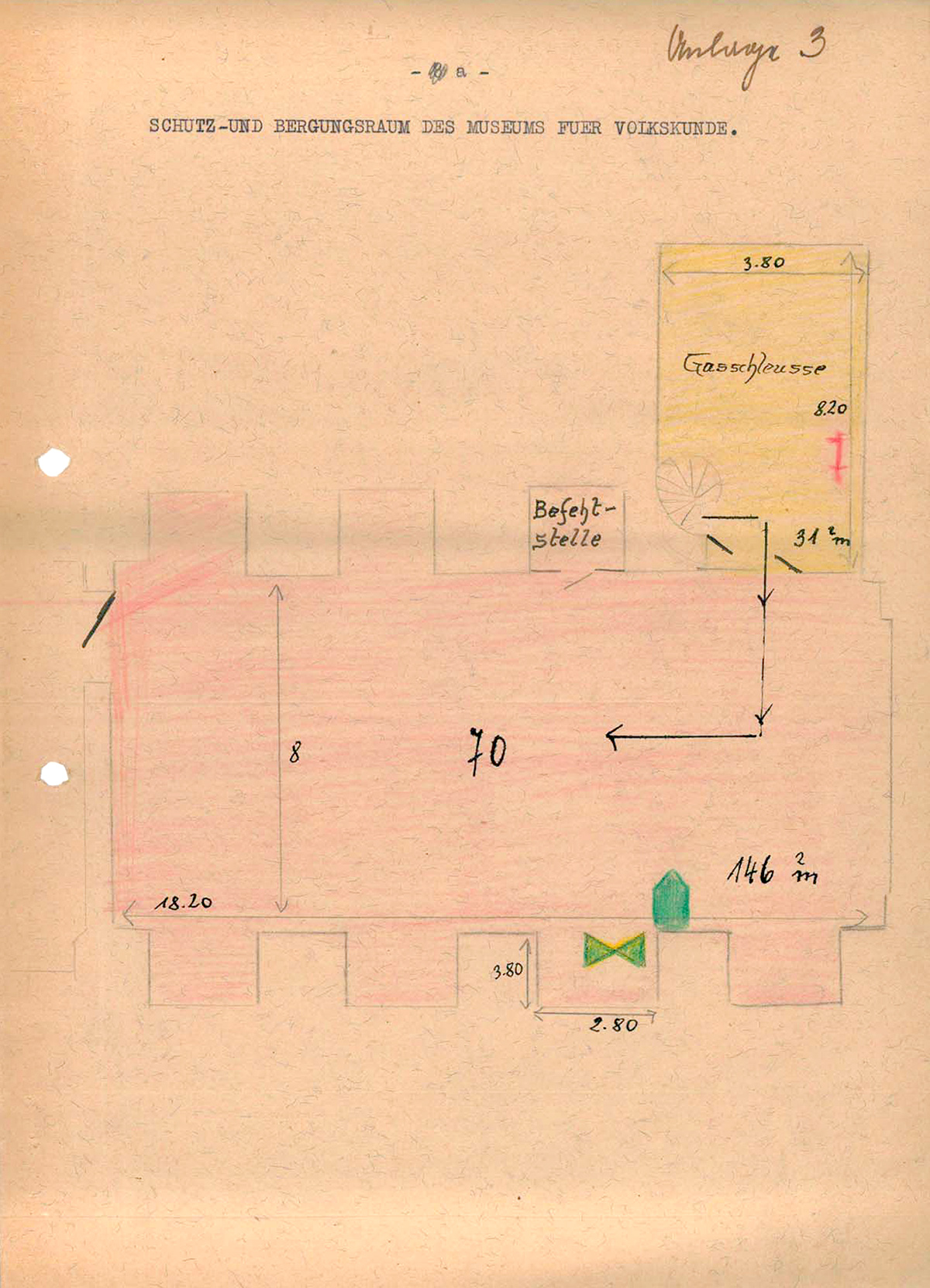
Building protection and building damage
Fire safety was of great importance at Schönborn Garden Palace due to its historic roof truss, as well as its location in Vienna’s densely populated 8th district. Accordingly, Volkskundemuseum, as the palace’s tenant, was required to implement fire safety and fire-fighting measures.27
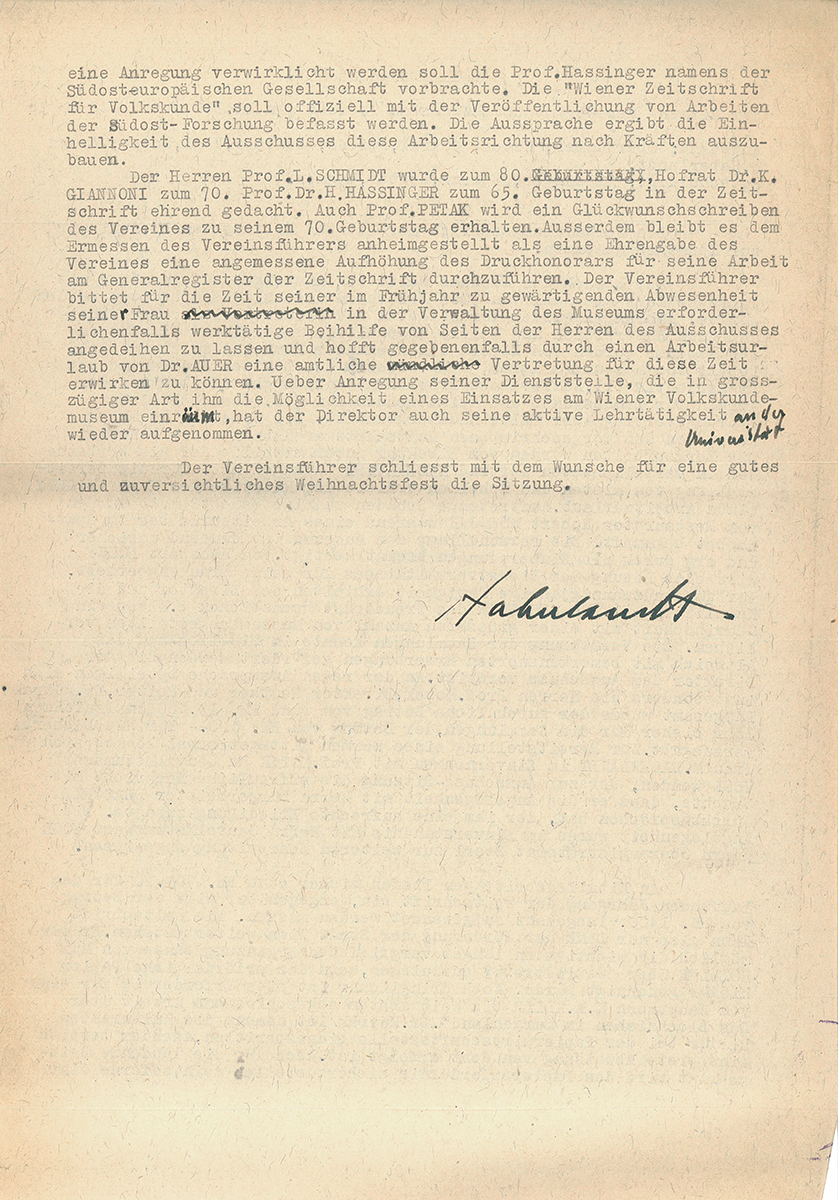
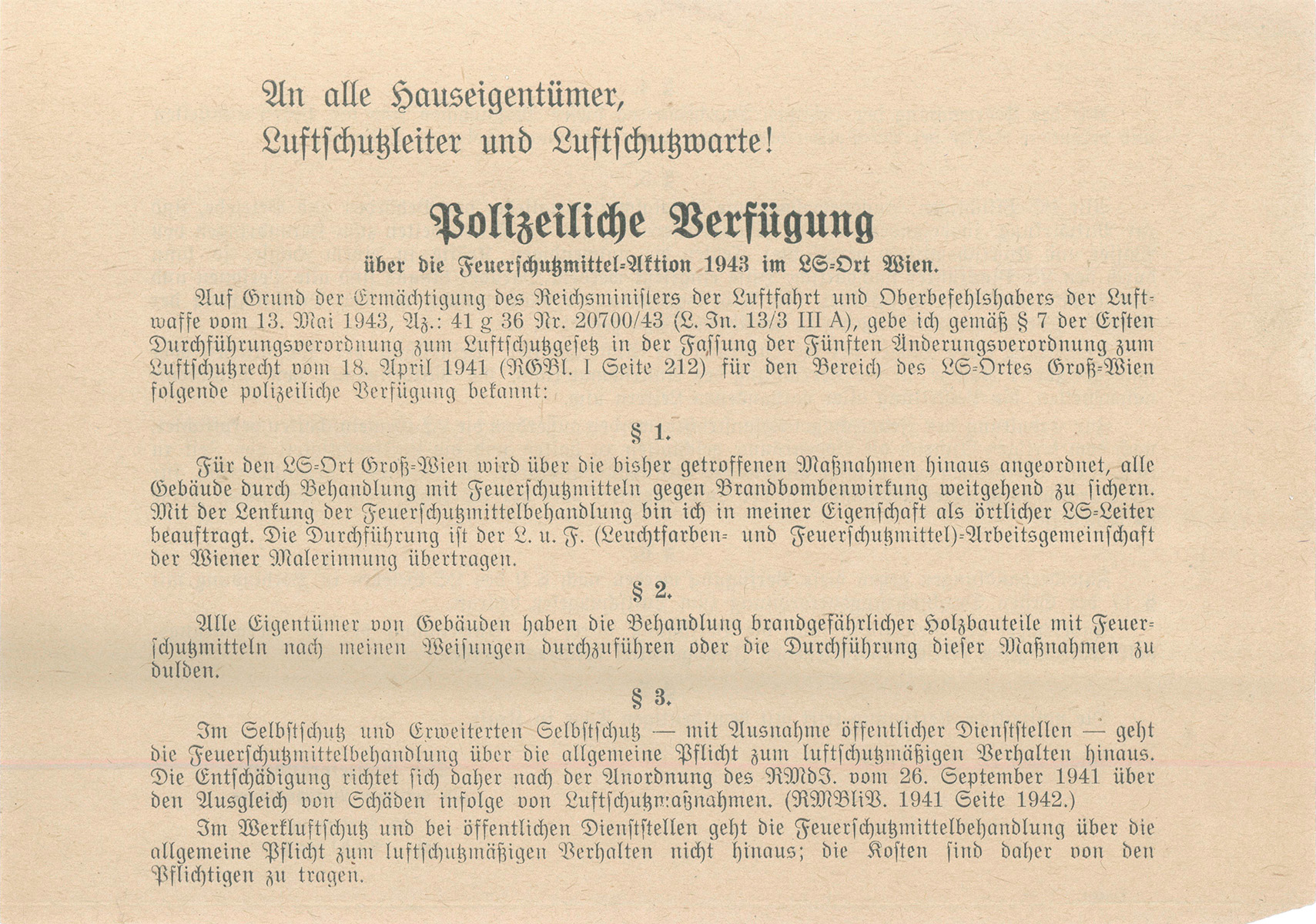
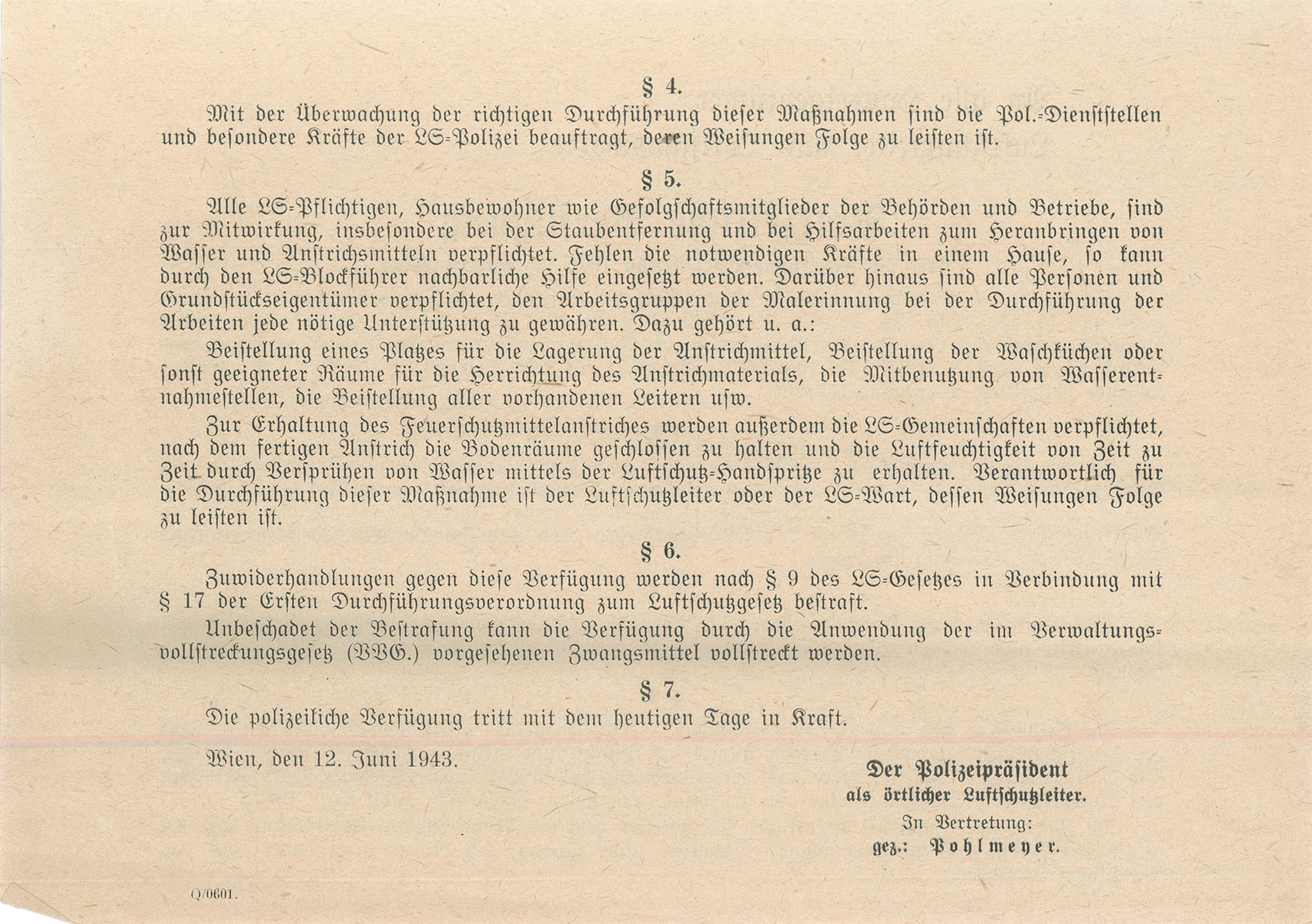
Starting in May 1943, police orders stated that all wooden elements in buildings needed to be treated with fire retardant (Ill. 15). Another police order, effective from mid-1943, stipulated that the fountain in the adjacent Schönbornpark and its reservoir be filled with water so that it could be used for fire-fighting.28 In addition, water barrels were filled and stored in the attic.29
Despite increasing air raids, the building did not suffer any severe damage during the war. In July 1944, Haberlandt reported finding flak shrapnel in the museum’s courtyard and garden following an air raid.30 In September 1944, “a total of 90 exterior window panes and one ventilation pane were shattered by air pressure […], furthermore, three window frames on the ground floor were torn out”.31 Five damaged areas on the roof were discovered after the bomb attacks.32 On 5 November 1944, 220 window panes shattered during an air raid and bricks broke out from the masonry in two places.33
- Cf. Herbert Nikitsch: Auf der Bühne früher Wissenschaft. Aus der Geschichte des Vereins für Volkskunde (1894-1945). Wien 2006, p. 397.
- Cf. air-raid protection plan for Volkskundemuseum Wien, valid from 1939 to 1945, p. 61; air-raid protection archive box, Volkskundemuseum Wien archive.
- Translation; original quote: “mit dem bei Ausschaltung des normalen Rundfunkempfanges die Nachrichten über Luftgefahr abgehört werden […]“; see: letter from Volkskundemuseum Wien to the Vienna Main Economic Office Wien dated 11 July 1944; air-raid protection archive box, Volkskundemuseum Wien archive.
- Cf. air-raid protection plan for Volkskundemuseum Wien, valid from 1939 to 1945, p. 65; air-raid protection archive box, Volkskundemuseum Wien archive.
- Cf. air-raid protection plan for Volkskundemuseum Wien, valid from 1939 to 1945, p. 69; air-raid protection archive box, Volkskundemuseum Wien archive.
- Cf. letter from Fuhrmanngasse police station to Volkskundemuseum Wien dated 20 February 1940; air-raid protection archive box, Volkskundemuseum Wien archive.
- Cf. letter from Robert Mucnjak to Arthur Haberlandt, 25 July 1939; air-raid protection archive box, Volkskundemuseum Wien archive.
- Ibid.
- Decrees of 12 May and 4 June 1942 concerning the air-raid protection measures for works of art, issued by the Reich Minister for Science, Education and Culture; cf. https://alex.onb.ac.at.
- Cf. Karl Autolny's request for work leave dated 13 July 1942; air-raid protection archive box, Volkskundemuseum Wien archive.
- Cf. request for heavy labour supplement cards submitted to the Vienna Main Economic Office on 20 August 1943; air-raid protection archive box, Volkskundemuseum Wien archive.
- Cf. minutes of the Joint Committee meeting held on 2 December 1943; air-raid protection archive box, Volkskundemuseum Wien archive.
- Cf. record of work to be carried out by the museum dated 20 December 1943; air-raid protection archive box, Volkskundemuseum Wien archive.
- Cf. letter from Volkskundemuseum Wien to the Kirchner shipping company dated 23 February 1944; air-raid protection archive box, Volkskundemuseum Wien archive.
- Cf. letter from Volkskundemuseum Wien to the Kirchner shipping company dated 29 February 1944; air-raid protection archive box, Volkskundemuseum Wien archive.
- (Translation); original quote: “dass alle wesentlichen Bestände nunmehr nach Tunlichkeit luftschutzsicher untergebracht sind”; see: letter from Volkskundemuseum to the Administrative Office for State Museums dated 2 May 1944; air-raid protection archive box, Volkskundemuseum Wien archive.
- Cf. list of rescued objects belonging to Volkskundemuseum Wien at Laudon Castle dated 30 April 1945; air-raid protection archive box, Volkskundemuseum Wien archive.
- Cf. letter from Volkskundemuseum Wien to Dr August Loehr dated 3 June 1945; air-raid protection archive box, Volkskundemuseum Wien archive.
- Cf. thank-you letter from Volkskundemuseum Wien to First Lieutenant Schultz dated 5 December 1945; air-raid protection archive box, Volkskundemuseum Wien archive.
- Cf. letter from Volkskundemuseum Wien to Municipal Administration Department 22 dated 20 October 1939; air-raid protection archive box, Volkskundemuseum Wien archive.
- Cf. letter from Volkskundemuseum Wien to the Ministry of the Interior and Cultural Affairs dated 2 October 1939; air-raid protection archive box, Volkskundemuseum Wien archive.
- Cf. order placed by Viktor Otte & Co. dated 19 September 1939; air-raid protection archive box, Volkskundemuseum Wien archive.
- Cf. report from Volkskundemuseum Wien to Fuhrmanngasse police station dated 21 April 1941; air-raid protection archive box, Volkskundemuseum Wien archive.
- Cf. air-raid protection plan for Volkskundemuseum Wien, valid from 1939 to 1945, p. 69; air-raid protection archive box, Volkskundemuseum Wien archive.
- Cf. report from Volkskundemuseum Wien to the Reichsstatthalter (Reich Governor) in Vienna dated 2 February 1943; air-raid protection archive box, Volkskundemuseum Wien archive.
- Ibid.
- Cf. report from Volkskundemuseum Wien to Fuhrmanngasse police station dated 21 April 1941; air-raid protection archive box, Volkskundemuseum Wien archive.
- Cf. letter from Volkskundemuseum Wien to the General Office for State Art Promotion, Vienna, dated 20 May 1943; air-raid protection archive box, Volkskundemuseum Wien archive.
- Cf. record of work to be carried out by the museum dated 20 December 1943; air-raid protection archive box, Volkskundemuseum Wien archive.
- Cf. letter from Volkskundemuseum Wien to the Vienna Main Economic Office dated 11 July 1944; air-raid protection archive box, Volkskundemuseum Wien archive.
- Translation; original quote: “insgesamt 90 Außenfensterscheiben und eine Ventilationsscheibe durch Luftdruckwirkung zertrümmert […], [f]erner sind drei Fensterstöcke im Erdgeschoss herausgerissen worden”; See: report on air-raid damage submitted by Volkskundemuseum Wien to the General Directorate on 11 September 1944; air-raid protection archive box, Volkskundemuseum Wien archive.
- Ibid.
- Cf. letter from Volkskundemuseum Wien to Dr Holey dated 6 November 1944; air-raid protection archive box, Volkskundemuseum Wien archive.