Evaluation
1988 to 2025
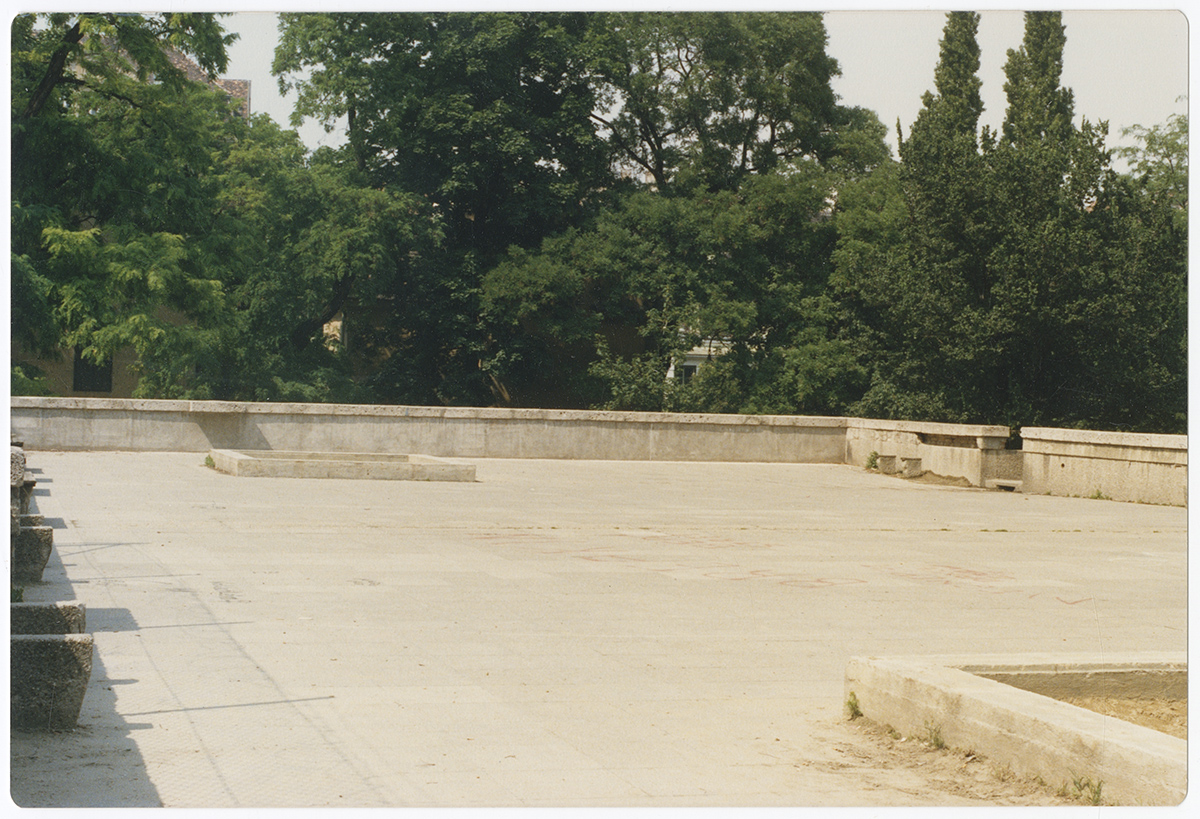
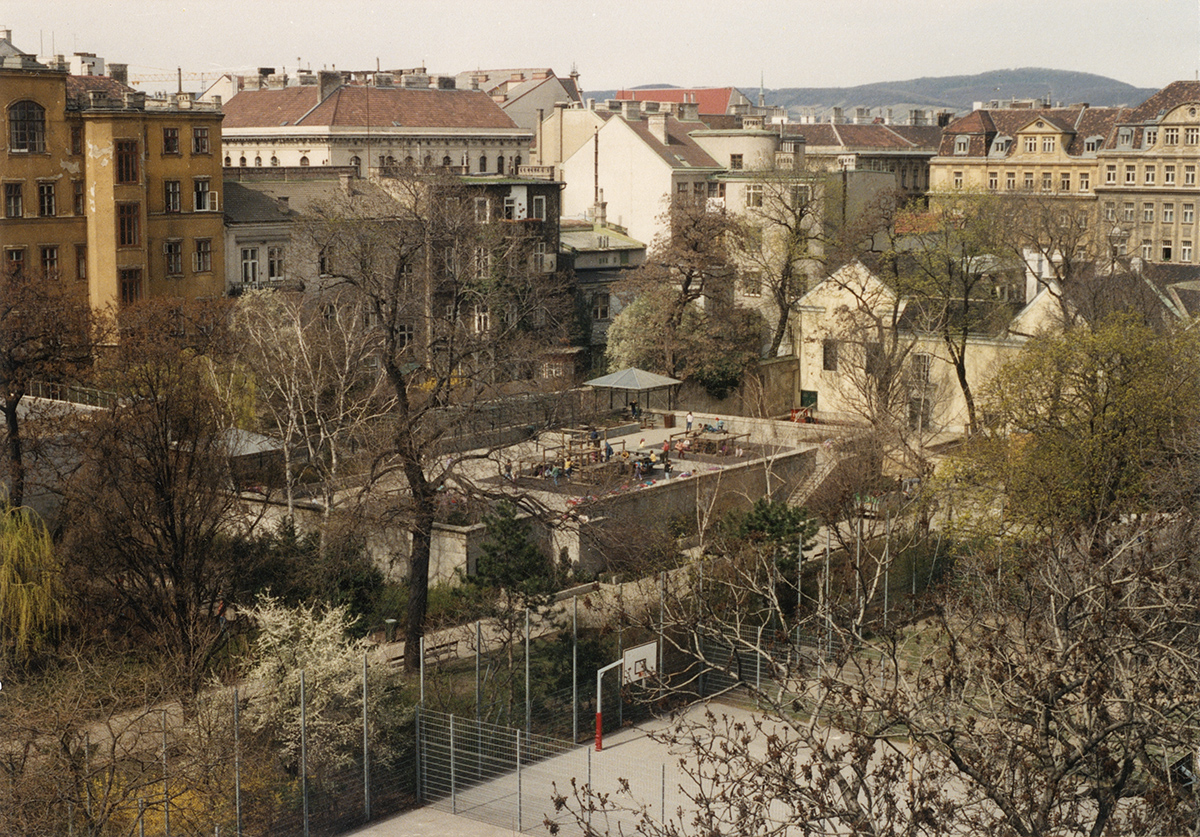
In 1988, the redesigned Schönbornpark was opened by Michael Häupl (*1949), then City Councillor for the Environment. In addition to the drinking fountain installed on the outer wall in 1987 (see Chapter 2: Becoming INvisible), the project also transformed the roof of the shelter from a playground with two sandpits (Ill. 1) into a “play space for young people” (Ill. 2).1 In 2011, this specific area was modernised, creating, according to a press release, a “feel-good oasis for children and adolescents”, featuring climbing frames, table tennis tables and wave benches.2
Volkskundemuseum carried out comprehensive renovation works inside the shelter in 2003 due to significant water damage and the resulting mould and pest infestation, leading to considerable changes to the interior design. During heavy rain, water had entered through both entrances through the previously installed double-winged steel doors. These doors were removed, disposed of and replaced with fire doors, and canopies were installed above them. Part of the existing ventilation system was cleaned and put back into operation, while the rest of the system was dismantled. The historical toilets and stalls were also removed, and all drainpipes were sealed. Extensive plaster was chipped off, the walls were replastered and painted, new electrical cables were laid, and a fire alarm system was installed.3 Before the creation of the new playground facility in 2011, the then Museum Director, Margot Schindler (*1952), sent a letter to the MA 42 city administration department (Vienna City Gardens) informing them that, before moving forward with the design plan for the roof, the roof itself needed to be renovated. The museum’s considerable investments in the years before had been compromised by leaks, and some rooms could no longer be used.4
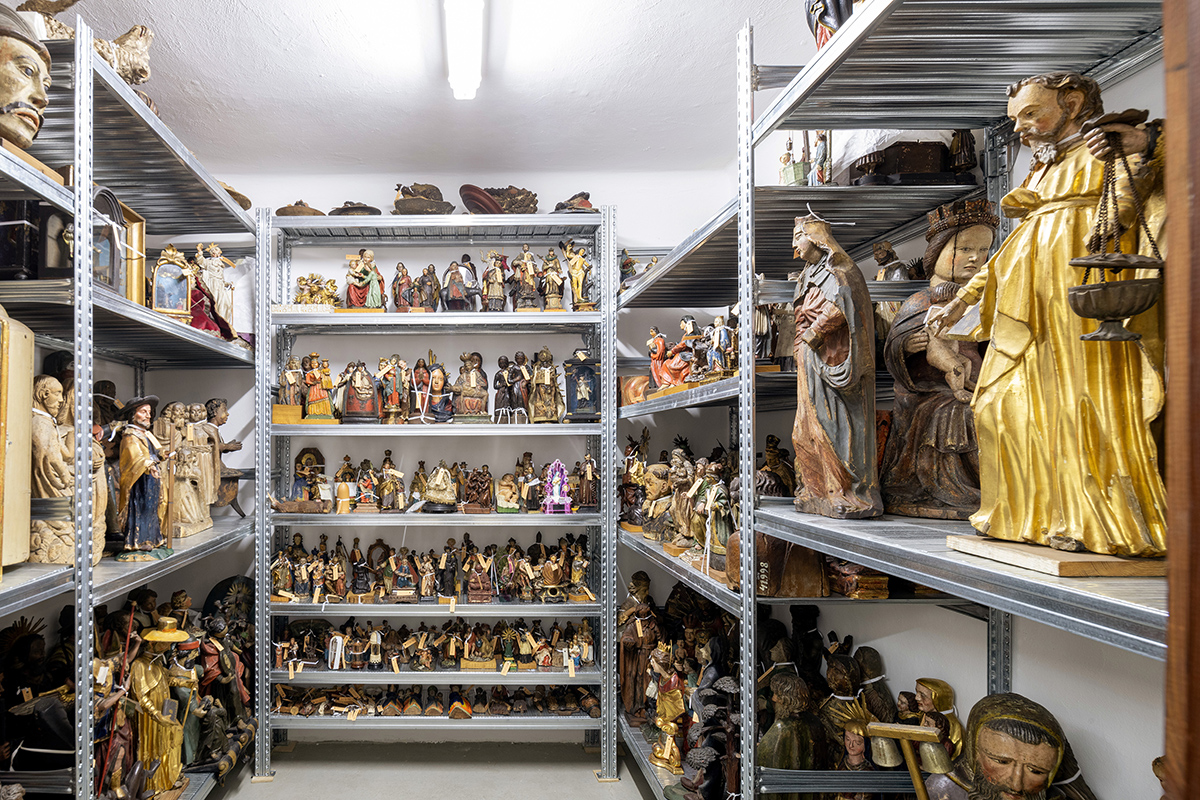
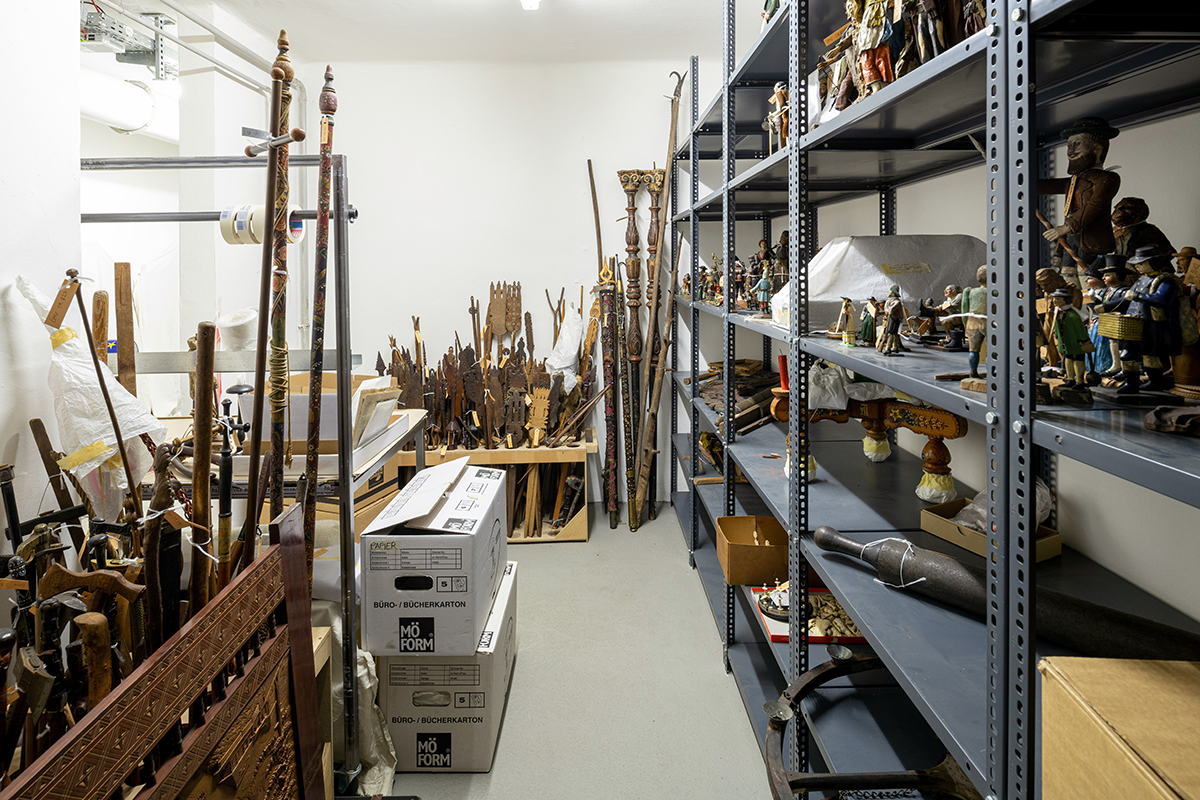
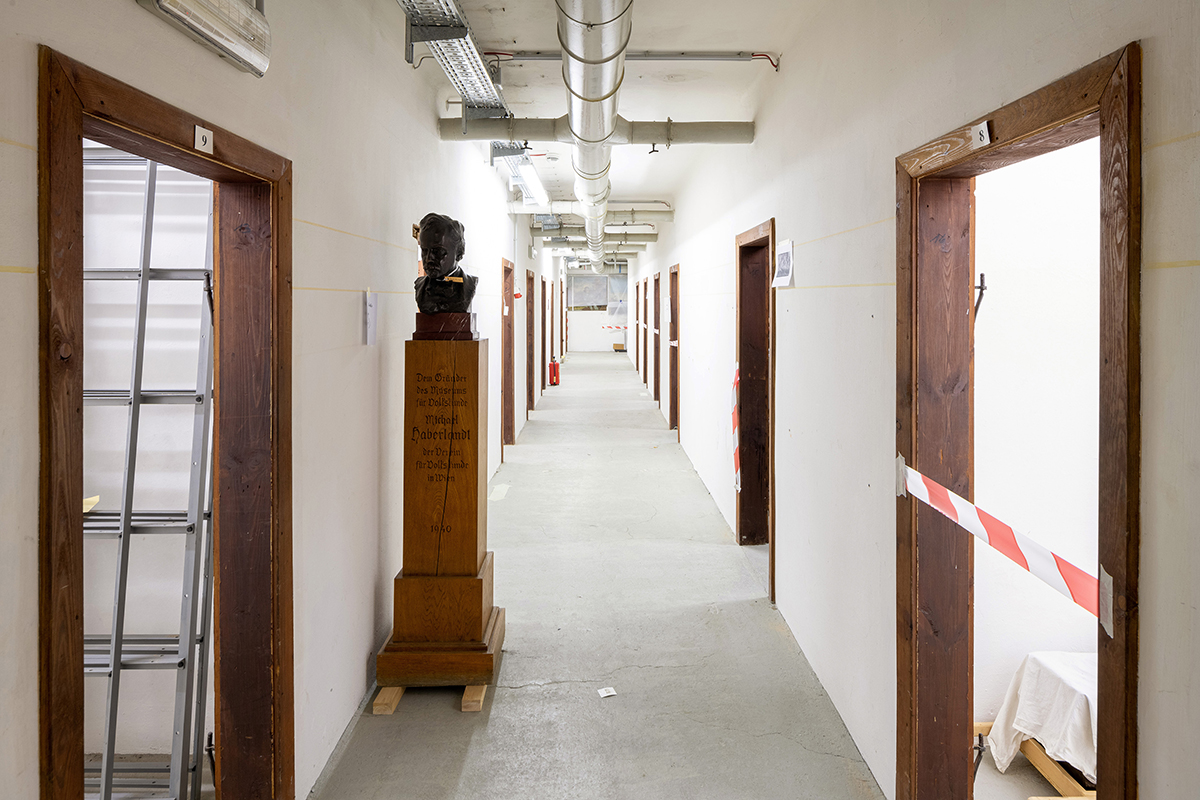
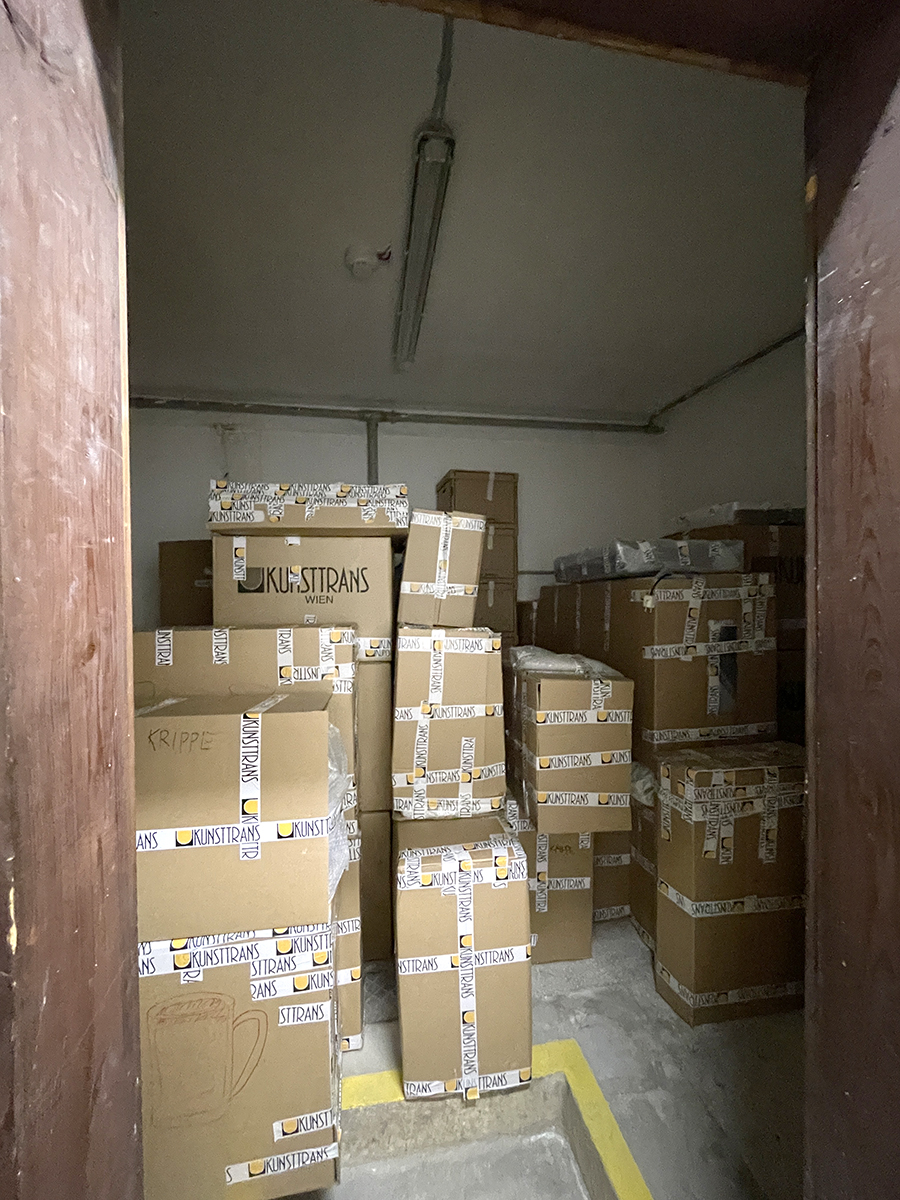
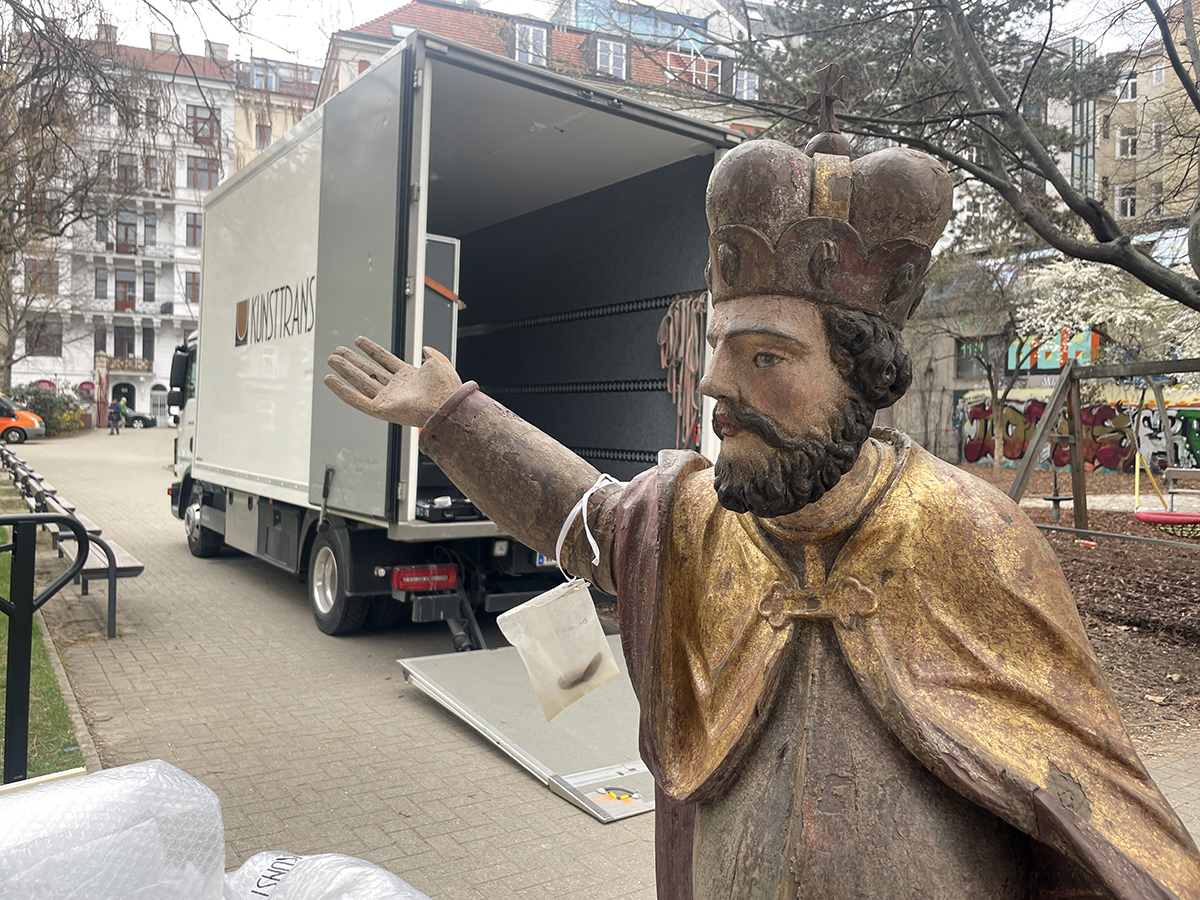
The moisture problems persisted (Ill. 3). Another intake of water in 2020 accelerated the relocation of museum objects (Ill. 4). In 2023 and 2024, the objects previously stored in the shelter were finally relocated (Ill. 5 to 8) and consolidated with all other holdings (collections, archive and library) in the museum’s main depot.
Making Space
Moving the museum objects out of the shelter ran parallel to preparatory and relocation work taking place ahead of the general renovation of the museum building on Laudongasse. As part of the programme Before It Gets Better ... Farewell and Departure from a Crumbling Present, the air-raid shelter was used for the first time as a performance venue in April and May 2024 for an installation created by the Toxic Dreams theatre collective. The building was transformed into ‘Fortress Austria’ and, with its 44 differently designed and equipped rooms, became the setting for Waiting for the Barbarians (Ill. 9 and 10). Parts of the sets remained in the shelter’s compartments and are presented during building tours organised by the cultural education department of Volkskundemuseum Wien.
The Schönbornpark air-raid shelter was again used as an installation space for massiv unsichtbar.
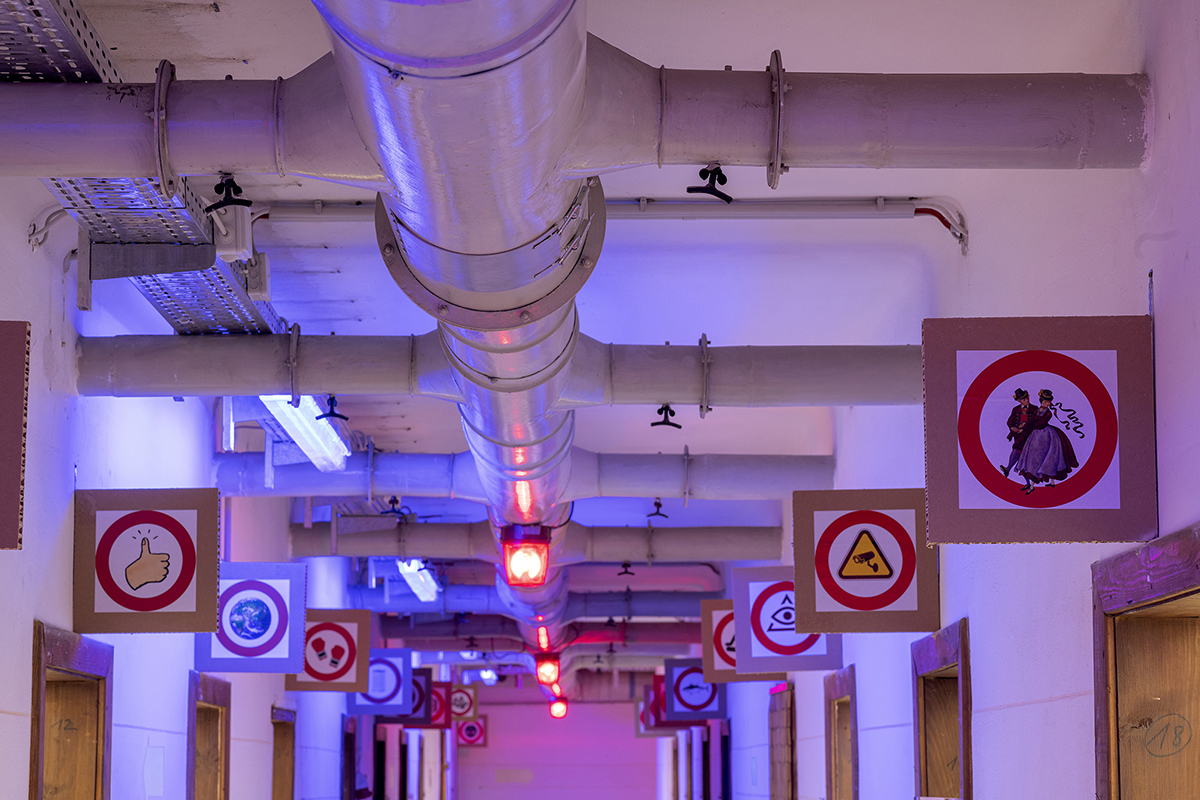
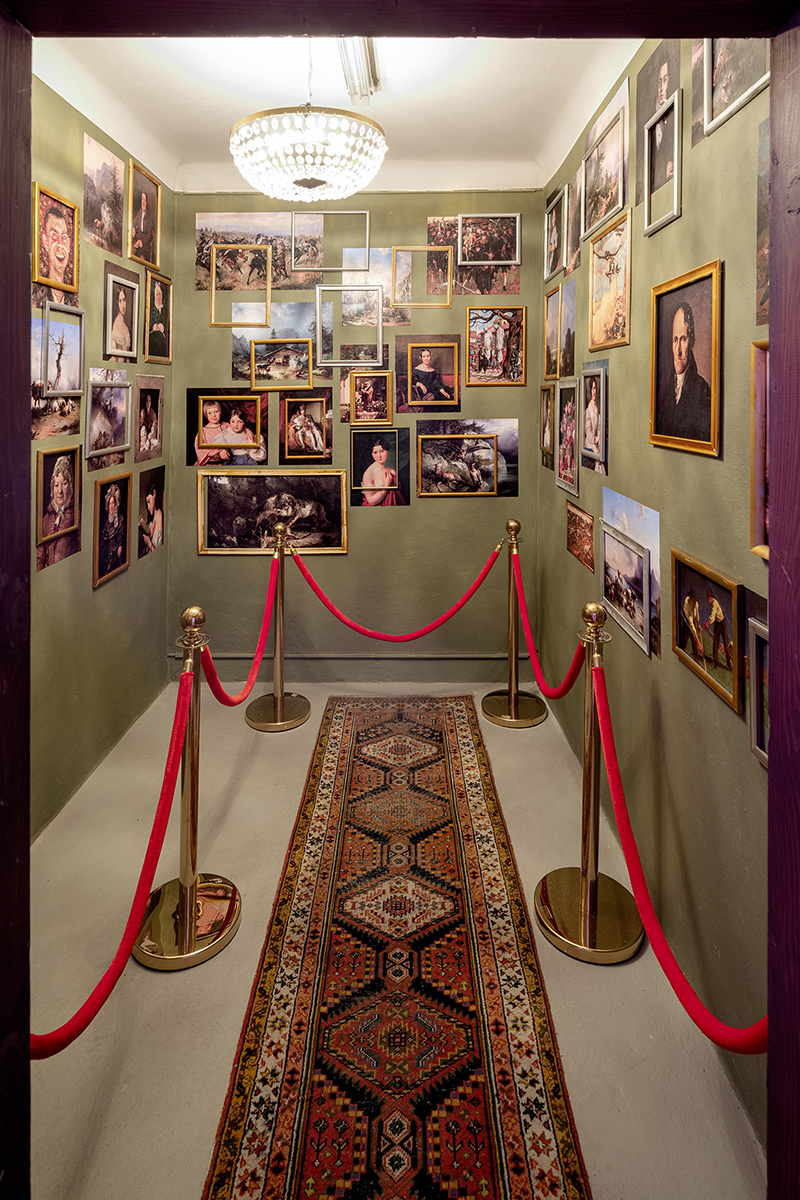
The Schönbornpark air-raid shelter has been open to interested visitors for guided tours since 2023. The interior spaces, with their remaining sets and a multi-channel sound installation, will continue to be open for tours until construction works begin, which will take place as part of the EU-funded Interreg project Turning Points – Museums for a Democratic Future, in collaboration with the Bratislava City Museum (Múzeum mesta Bratislavy).
- (Translation); original quote: “Spielfläche für Jugendliche”; cf. City Hall correspondence, Wednesday, 19 April 1988, page 718, https://www.digital.wienbibliothek.at/wbrobv/periodical/pageview/3482221?query=%22Sch%C3%B6nbornpark%22.
- (Translation); original quote: “Wohlfühloase für Kinder und Jugendliche”; cf. press release from Josefstadt District Council, 10 November 2011, “Originaltext-Service” of the APA Austria Press Agency, https://www.ots.at/presseaussendung/OTS_20111110_OTS0255/bv-josefstadt-neuer-spielplatz-im-schoenbornpark-eroeffnet.
- Cf. shelter renovation archive folder, Volkskundemuseum Wien archive.
- Cf. letter from Margot Schindler to MA 42/Vienna City Gardens dated 10 May 2011, air-raid shelter archive folder 1969.